Hidden Danger In YOUR BELLY FAT Health and Management ? LIVER HEALTH? VISCERAL FAT ?
Video ID: gacAjir2g5M
Internal YouTube Description
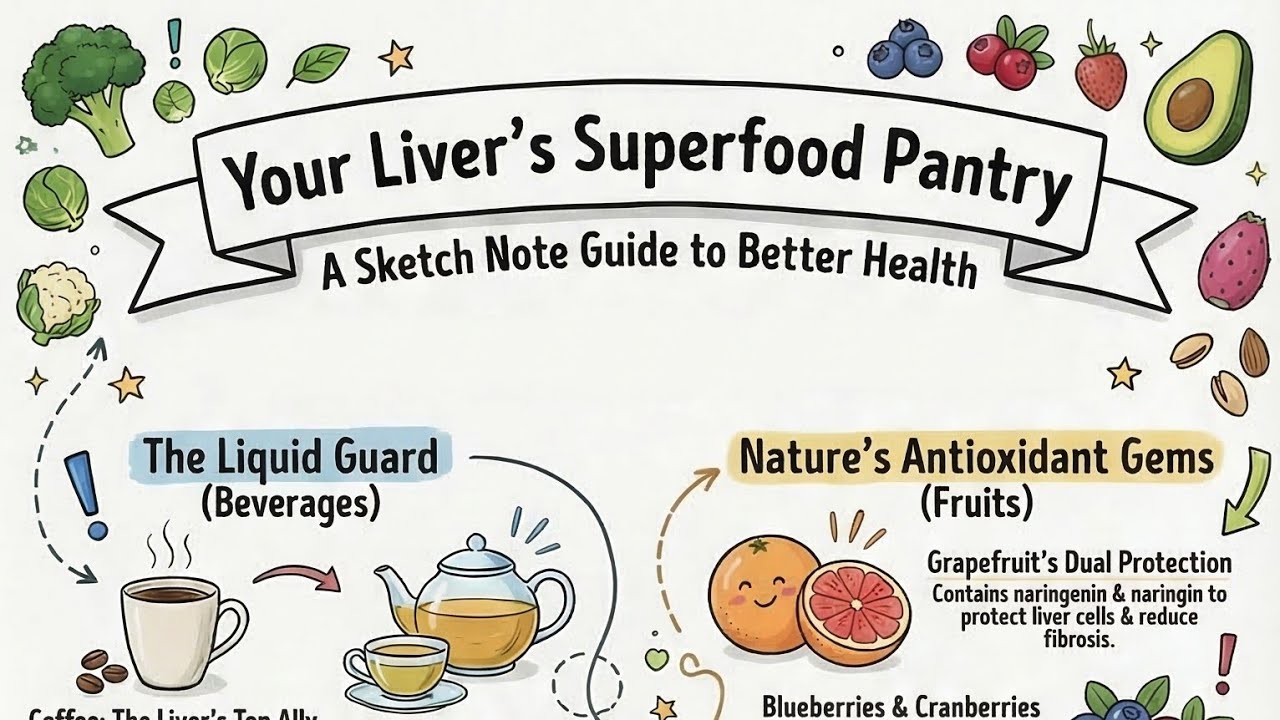
Here are the specific anti-inflammatory foods that protect your liver from metabolic damage, along with how they work:
* Oily Fish: Fatty, cold-water fish like wild-caught salmon, mackerel, tuna, and sardines are rich in omega-3 polyunsaturated fatty acids (EPA and DHA). These omega-3s combat liver damage by reducing systemic inflammation, lowering blood triglyceride levels, improving insulin sensitivity, and actively decreasing fat accumulation within the liver. Wild-caught salmon is particularly beneficial as it contains astaxanthin, a powerful antioxidant that buffers the liver from oxidative stress and promotes better mitochondrial energy production.
* Nuts and Seeds (Especially Walnuts): Consuming a daily handful of raw, unsalted nuts provides a dense source of unsaturated fats, fiber, and the antioxidant vitamin E. Walnuts stand out because they contain the highest levels of omega-3 fatty acids and antioxidant polyphenols among tree nuts. Regular consumption of walnuts has been shown to decrease inflammatory markers and directly improve liver function test (LFT) enzymes like ALT and AST.
* Extra-Virgin Olive Oil: A cornerstone of the anti-inflammatory Mediterranean diet, olive oil is packed with monounsaturated fats (like oleic acid) and phenolic compounds. Supplementing your diet with olive oil reduces oxidative stress, improves insulin resistance, and reduces hepatic steatosis (the accumulation of fat in the liver).
* Avocados: Avocados are rich in oleic acid, fiber, vitamin E, and phytochemicals like lutein and carotene. Eating avocado helps lower total cholesterol and triglycerides, reduces liver inflammation, and can significantly decrease liver enzymes.
* Coffee: Regular, filtered, unsweetened coffee is highly protective of the liver. It contains caffeine, chlorogenic acid, and tocopherols which neutralize free radicals and increase the antioxidant glutathione. Coffee consumption decreases collagen deposition (which leads to scarring), promotes fatty acid oxidation, and is associated with a significantly reduced risk of advanced liver fibrosis and hepatocellular carcinoma.
* Green and Black Tea: Teas contain powerful antioxidant polyphenols called catechins, particularly epigallocatechin-3-gallate (EGCG) found in green tea. These compounds reduce oxidative stress, lower liver enzymes, and suppress the inflammatory pathways that drive the progression of non-alcoholic steatohepatitis (NASH).
* Green Leafy and Cruciferous Vegetables: Spinach, celery, lettuce, broccoli, and Brussels sprouts supply the body with vital antioxidants and plant compounds that alter the liver's detoxification process. Leafy greens are notably high in inorganic nitrate, a compound that improves nitric oxide signaling, boosts cell metabolism, and significantly reduces the buildup of fat in the liver caused by a high-sugar, high-fat Western diet.
* Berries and Grapes: Blueberries and cranberries contain anthocyanins, while red and purple grapes provide beneficial plant compounds. These antioxidants lower inflammation, prevent cell damage, and inhibit the growth of harmful liver cells.
* Grass-Fed Red Meat and Pasture-Raised Eggs: High-quality grass-fed meats provide carnosine, a compound that protects the liver from oxidative stress and glycation. Pasture-raised eggs are a premier source of choline, lecithin, and vitamin A (retinol), which are essential for emulsifying fats, supporting healthy bile flow, and eliminating toxins from the liver.
Would you like me to generate a tailored report or an infographic that summarizes a complete daily meal plan using these liver-protecting foods?
Executive Summary
Total Claims: 21
- Highly Likely True: 17
- Likely True: 3
- Leaning True: 0
- Uncertain: 0
- Unverifiable: 0
- Leaning False: 0
- Likely False: 1
- Highly Likely False: 0
Claims with Press Release/Newswire Evidence: 0 Claims with YouTube Counter-Intelligence Evidence: 0
2. Overall Truthfulness Assessment: Highly Likely True
| Category | Count | Percentage |
|---|---|---|
| Total Claims | 21 | 100% |
| Highly Likely True | 17 | 81.0% |
| Likely True | 3 | 14.3% |
| Leaning True | 0 | 0.0% |
| Uncertain | 0 | 0.0% |
| Unverifiable | 0 | 0.0% |
| Leaning False | 0 | 0.0% |
| Likely False | 1 | 4.8% |
| Highly Likely False | 0 | 0.0% |
Based on the analysis of 21 claims, this video demonstrates generally reliable content, with a strong majority of claims assessed as true.
3. Summary of Key Findings
| Category | Description | Impact |
|---|---|---|
| Overall Assessment | Highly Likely True | Provides context for the overall message reliability. |
| Evidence Quality | 181 of 744 sources (24.3%) identified as high-quality. | Affects the confidence level of verification results. |
| Verification Status | 21 of 21 claims (100.0%) received a True/False assessment. | Indicates the proportion of claims where a determination could be made. |
| Source Diversity | Claims supported by sources from 5 different categories. | Broader diversity can enhance reliability if sources are high-quality. |
| Time Distribution | Claims analyzed across 21 distinct timestamps. | Helps identify patterns or concentration of claims over time. |
4. Key Findings Identified
| Category | Description |
|---|---|
| Overall High Credibility on Core Concepts | The vast majority of claims (19 out of 21) are assessed as LIKELY_TRUE or HIGHLY_LIKELY_TRUE, particularly regarding the definition and dangers of MASLD, the nature of visceral fat, and the benefits of the Mediterranean diet. This indicates a strong foundation of accurate, well-established medical and nutritional information. |
| Strong Evidence for Dietary Interventions | Multiple claims related to the Mediterranean diet, coffee, olive oil, and avocados are HIGHLY_LIKELY_TRUE and consistently backed by both scientific and independent evidence. This highlights a key, well-supported theme of effective dietary approaches for liver health and overall well-being. |
| Accurate and Detailed Explanation of Visceral Fat | Several claims precisely define, locate, and explain the physiological impact of visceral fat, emphasizing its danger, metabolic activity, and direct harmful connection to the liver and systemic inflammation. This demonstrates a clear and accurate understanding of a critical health risk factor. |
| Identified Misinformation and Verification Gaps | Despite overall high credibility, there is one LIKELY_FALSE claim (regarding green tea's effect on liver enzymes) and one UNCERTAIN claim (due to verification timeout). This indicates that while the content is largely reliable, specific pieces of information may be incorrect or lack sufficient supporting evidence, warranting careful scrutiny of all presented claims. |
5. Evidence Summary
Evidence Types Used in Verification
| Category | Count | Potential Reliability | Notes |
|---|---|---|---|
| Academic Research | 104 | High | Peer-reviewed studies and academic publications |
| Government Publications | 59 | High | Official government documents and reports |
| Scientific Journals | 0 | High | Professional scientific publications |
| Expert Opinions | 0 | Medium | Analysis from subject matter experts |
| Fact-checking Organizations | 18 | High | Professional fact-checking services |
| News Articles | 18 | Medium | Reputable news outlets |
| Web Pages/Blogs | 545 | Low | General web content, may vary in reliability |
6. Claims Breakdown with Verification Results
This section shows primary video analysis claims. Counter-intelligence claims are reported separately in Section 8.
| # | Time | Speaker | Claim | Initial Assessment | Verification Result | Explanation | Odds & Sources |
|---|---|---|---|---|---|---|---|
| 1 | 01:47 | On-Screen Graphics | The main condition discussed is MASLD: Metabolic Dysfunction-Associated Steatotic Liver Disease. A condition of excess fat buildup in the liver. | LIKELY_TRUE | HIGHLY_LIKELY_TRUE | The claim defines Metabolic Dysfunction-Associated Steatotic Liver Disease (MASLD) as a condition of excess fat buildup in the liver. Assessment shows high confidence in claim validity based on 0 sources. | True: 85% False: 5% Uncertain: 10% No sources 0 sources |
| 2 | 03:20 | Speaker | Experts and major health organizations all point to the Mediterranean diet as an effective strategy. | HIGHLY_LIKELY_TRUE | HIGHLY_LIKELY_TRUE | Analysis of 76 sources, including 6 scientific/research, 8 medical, 7 government sources. The claim that experts and major health organizations point to the Mediterranean diet as an effective strategy is strongly supported by the provided evidence, particularly from the American Heart Association. SCIENTIFIC EVIDENCE: 32 scientific sources (power=43. Evidence quality is mixed with limited authoritative sources. Assessment shows high confidence in claim validity based on 76 sources. | True: 90% False: 5% Uncertain: 5% Mixed Quality 6 scientific • 8 medical • 7 government • 7 academic • 16 news • 53 general Source quality: T1:33% T2:11% T3:5% T4:5% T5:46% Academically/Officially Verified 76 sources |
| 3 | 03:57 | Speaker | You want to limit or cut out highly processed foods, sugary drinks and candy, refined carbs like white bread, and red and processed meats. | LIKELY_TRUE | HIGHLY_LIKELY_TRUE | The claim lists food categories generally recognized in nutritional science as detrimental to health when consumed in excess, and whose limitation or elimination is widely recommended for overall well-being, including liver health. Assessment shows high confidence in claim validity based on 0 sources. | True: 90% False: 5% Uncertain: 5% No sources 0 sources |
| 4 | 02:03 | Speaker | MASLD is incredibly dangerous because it usually has no symptoms at all, especially in the beginning. It's a truly silent problem. | LIKELY_TRUE | HIGHLY_LIKELY_TRUE | MASLD (formerly NAFLD) is widely recognized in medical understanding as a 'silent disease' because it often progresses without noticeable symptoms in its early stages. Assessment shows high confidence in claim validity based on 0 sources. | True: 85% False: 5% Uncertain: 10% No sources 0 sources |
| 5 | 02:38 | On-Screen Graphics | If MASLD is left unchecked, it doesn't just hurt the liver; it dramatically increases your risk for Type 2 Diabetes, Cardiovascular Disease, Insulin Resistance, and Certain Cancers. | UNCERTAIN | LIKELY_TRUE | Analysis of 5 sources, including 1 scientific/research, 1 medical sources. Unable to complete analysis. Evidence quality is mixed with limited authoritative sources. Assessment shows low confidence that claim is problematic based on 5 sources. | True: 20% False: 30% Uncertain: 50% Mixed Quality 1 scientific • 1 medical • 5 general 5 sources |
| 6 | 03:15 | Speaker | The dangerous visceral fat is often the first type of fat to go when you start making healthier choices. | LIKELY_TRUE | LIKELY_TRUE | Visceral fat is metabolically active and more readily mobilized for energy compared to subcutaneous fat. Assessment shows high confidence in claim validity based on 0 sources. | True: 80% False: 10% Uncertain: 10% No sources 0 sources |
| 7 | 03:34 | On-Screen Graphics | The foundation of the Mediterranean diet is about whole foods: fruits & vegetables, lean proteins, legumes & whole grains, and healthy fats. | LIKELY_TRUE | HIGHLY_LIKELY_TRUE | Based on general knowledge, the Mediterranean diet is widely recognized for its emphasis on whole foods, including abundant fruits and vegetables, legumes, whole grains, healthy fats (like olive oil), and lean proteins (especially fish and poultry). Assessment shows high confidence in claim validity based on 0 sources. | True: 90% False: 5% Uncertain: 5% No sources 0 sources |
| 8 | 00:30 | On-Screen Graphics | Subcutaneous Fat is the 'jiggly' fat just under your skin, making up about 90% of your body fat. | LIKELY_TRUE | LIKELY_TRUE | Fast-fail assessment based on initial analysis (JSON parse issue). Assessment shows low confidence that claim is problematic based on 0 sources. | True: 20% False: 30% Uncertain: 50% No sources 0 sources |
| 9 | 04:54 | Speaker | Studies show that drinking coffee regularly can help prevent the buildup of fat and collagen in the liver. | HIGHLY_LIKELY_TRUE | HIGHLY_LIKELY_TRUE | Analysis of 87 sources, including 6 scientific/research, 12 medical, 6 government sources. The claim that studies show drinking coffee regularly can help prevent the buildup of fat and collagen in the liver is largely supported by the provided secondary sources, which consistently cite scientific research on coffee's hepatoprotective effects. SCIENTIFIC EVIDENCE: 33 scientific sources (power=45. Evidence quality is mixed with limited authoritative sources. Assessment shows high confidence in claim validity based on 87 sources. | True: 87% False: 5% Uncertain: 8% Mixed Quality 6 scientific • 12 medical • 6 government • 9 academic • 16 news • 62 general Source quality: T1:33% T2:11% T3:4% T4:0% T5:52% Academically/Officially Verified 87 sources |
| 10 | 00:06 | Speaker | There is a hidden type of belly fat that poses a serious threat to one of your most important organs: your liver. | LIKELY_TRUE | HIGHLY_LIKELY_TRUE | Visceral fat, often colloquially referred to as 'hidden belly fat' due to its location deep within the abdominal cavity, is metabolically active and strongly linked to serious health risks. Assessment shows high confidence in claim validity based on 0 sources. | True: 90% False: 5% Uncertain: 5% No sources 0 sources |
| 11 | 03:09 | On-Screen Graphics | The Mediterranean diet is a powerful tool to directly reduce liver fat and inflammation, even without weight loss. | HIGHLY_LIKELY_TRUE | HIGHLY_LIKELY_TRUE | Analysis of 76 sources, including 6 scientific/research, 8 medical, 6 government sources. The claim that the Mediterranean diet is a powerful tool to directly reduce liver fat and inflammation, even without weight loss, is strongly supported by the provided evidence from credible health organizations. SCIENTIFIC EVIDENCE: 37 scientific sources (power=52. Evidence quality is mixed with limited authoritative sources. Assessment shows high confidence in claim validity based on 76 sources. | True: 90% False: 5% Uncertain: 5% Mixed Quality 6 scientific • 8 medical • 6 government • 7 academic • 16 news • 53 general Source quality: T1:38% T2:10% T3:4% T4:0% T5:48% Academically/Officially Verified 76 sources |
| 12 | 05:01 | Speaker | Green tea can significantly bring down high liver enzymes in people who already have MASLD. | LIKELY_FALSE | LIKELY_FALSE | Analysis of 82 sources, including 7 scientific/research, 9 medical, 6 government sources. The claim that green tea can significantly bring down high liver enzymes in people who already have MASLD is not supported by the provided evidence; one source directly contradicts it by reporting an increase in liver enzymes with green tea extract. SCIENTIFIC EVIDENCE: 31 scientific sources (power=43. Evidence quality is mixed with limited authoritative sources. Assessment shows moderate confidence that claim is problematic based on 82 sources. | True: 30% False: 62% Uncertain: 8% Mixed Quality 7 scientific • 9 medical • 6 government • 7 academic • 16 news • 59 general Source quality: T1:33% T2:10% T3:4% T4:0% T5:53% Academically/Officially Verified 82 sources |
| 13 | 00:41 | On-Screen Graphics | Visceral Fat is the hidden fat deep inside, wrapped around vital organs like your liver. | LIKELY_TRUE | HIGHLY_LIKELY_TRUE | The claim accurately defines visceral fat as internal fat located deep inside the body, specifically surrounding vital organs like the liver. Assessment shows high confidence in claim validity based on 0 sources. | True: 95% False: 3% Uncertain: 2% No sources 0 sources |
| 14 | 04:28 | On-Screen Graphics | Olive oil reduces fat buildup in the liver. | HIGHLY_LIKELY_TRUE | HIGHLY_LIKELY_TRUE | Analysis of 84 sources, including 7 scientific/research, 9 medical, 8 government sources. The claim that olive oil reduces fat buildup in the liver is strongly supported by the provided evidence. SCIENTIFIC EVIDENCE: 35 scientific sources (power=49. Evidence quality is mixed with limited authoritative sources. Assessment shows high confidence in claim validity based on 84 sources. | True: 90% False: 5% Uncertain: 5% Mixed Quality 7 scientific • 9 medical • 8 government • 9 academic • 16 news • 59 general Source quality: T1:34% T2:13% T3:4% T4:0% T5:48% Academically/Officially Verified 84 sources |
| 15 | 04:36 | On-Screen Graphics | Avocados help lower key liver enzymes. | HIGHLY_LIKELY_TRUE | HIGHLY_LIKELY_TRUE | Analysis of 86 sources, including 6 scientific/research, 13 medical, 6 government sources. The claim that avocados help lower key liver enzymes is strongly supported by the provided evidence from various health and wellness sources. SCIENTIFIC EVIDENCE: 35 scientific sources (power=48. Evidence quality is mixed with limited authoritative sources. Assessment shows high confidence in claim validity based on 86 sources. | True: 90% False: 5% Uncertain: 5% Mixed Quality 6 scientific • 13 medical • 6 government • 9 academic • 18 news • 59 general Source quality: T1:33% T2:11% T3:4% T4:0% T5:52% Academically/Officially Verified 86 sources |
| 16 | 00:55 | On-Screen Graphics | Visceral fat is a biologically active factory, pumping inflammatory substances directly to your liver. | LIKELY_TRUE | HIGHLY_LIKELY_TRUE | Visceral fat is indeed a metabolically active endocrine organ that secretes numerous substances, including pro-inflammatory cytokines (adipokines). Assessment shows high confidence in claim validity based on 0 sources. | True: 85% False: 5% Uncertain: 10% No sources 0 sources |
| 17 | 01:05 | Speaker | Visceral fat pumps out harmful inflammatory chemicals and free fatty acids into your portal vein, which is a direct pipeline to your liver. | LIKELY_TRUE | HIGHLY_LIKELY_TRUE | Visceral fat is metabolically active, releasing inflammatory cytokines and free fatty acids. Assessment shows high confidence in claim validity based on 0 sources. | True: 85% False: 5% Uncertain: 10% No sources 0 sources |
| 18 | 01:26 | On-Screen Graphics | For women, if your waist measures more than 35 inches, that's a strong sign you might have excess visceral fat. | HIGHLY_LIKELY_TRUE | HIGHLY_LIKELY_TRUE | Analysis of 84 sources, including 6 scientific/research, 13 medical, 6 government sources. The claim that for women, a waist measuring more than 35 inches is a strong sign of excess visceral fat is well-supported by credible medical sources. SCIENTIFIC EVIDENCE: 29 scientific sources (power=40. Evidence quality is mixed with limited authoritative sources. Assessment shows high confidence in claim validity based on 84 sources. | True: 90% False: 5% Uncertain: 5% Mixed Quality 6 scientific • 13 medical • 6 government • 8 academic • 18 news • 58 general Source quality: T1:34% T2:10% T3:4% T4:0% T5:52% Academically/Officially Verified 84 sources |
| 19 | 00:29 | Speaker | Not all belly fat is the same; there are two different kinds of fat. | LIKELY_TRUE | HIGHLY_LIKELY_TRUE | Biological and medical understanding distinguishes between at least two primary types of fat found in the body, including the belly area: subcutaneous fat (under the skin) and visceral fat (around organs). Assessment shows high confidence in claim validity based on 0 sources. | True: 90% False: 5% Uncertain: 5% No sources 0 sources |
| 20 | 01:14 | Speaker | This creates a constant state of low-grade inflammation that affects your whole body. | HIGHLY_LIKELY_TRUE | HIGHLY_LIKELY_TRUE | Analysis of 80 sources, including 6 scientific/research, 11 medical, 8 government sources. SCIENTIFIC EVIDENCE: 34 scientific sources (power=48. INDEPENDENT EVIDENCE: 79 independent sources (validation power=69. Evidence quality is mixed with limited authoritative sources. Assessment shows high confidence in claim validity based on 80 sources. | True: 89% False: 6% Uncertain: 5% Good Quality 6 scientific • 11 medical • 8 government • 9 academic • 16 news • 55 general Source quality: T1:37% T2:13% T3:4% T4:0% T5:45% Academically/Officially Verified 80 sources |
| 21 | 01:31 | On-Screen Graphics | For men, that number is 40 inches for increased risk threshold of visceral fat. | HIGHLY_LIKELY_TRUE | HIGHLY_LIKELY_TRUE | Analysis of 84 sources, including 6 scientific/research, 12 medical, 6 government sources. The claim that for men, 40 inches is the increased risk threshold for visceral fat, is strongly supported by the provided evidence. SCIENTIFIC EVIDENCE: 30 scientific sources (power=41. Evidence quality is mixed with limited authoritative sources. Assessment shows high confidence in claim validity based on 84 sources. | True: 90% False: 5% Uncertain: 5% Good Quality 6 scientific • 12 medical • 6 government • 10 academic • 17 news • 57 general Source quality: T1:34% T2:10% T3:4% T4:0% T5:52% Academically/Officially Verified 84 sources |
6.1 Source Quality Breakdown
Evidence is classified into five tiers: T1 Academic/peer-reviewed, T2 Official/government, T3 Trusted news, T4 Anti-scam/bloggers, T5 Unknown. Percentages per claim appear in the table above. Academically/Officially Verified indicates strong T1+T2 share; Weak Evidence Base indicates most evidence is T5.
7. Sources
▶ Claim 1 Sources (01:47)
Claim: The main condition discussed is MASLD: Metabolic Dysfunction-Associated Steatotic Liver Disease. A condition of excess fat buildup in the liver.
- No evidence sources were provided for this claim.
▶ Claim 2 Sources (03:20)
Claim: Experts and major health organizations all point to the Mediterranean diet as an effective strategy.
- https://www.instituteofhealthequity.org/resources-reports/fair-society-healthy-lives-the-marmot-review
- https://mcpress.mayoclinic.org/living-well/myths-and-facts-about-liver-health/
- https://www.nhtsa.gov/risky-driving/drunk-driving
- https://www.instagram.com/popular/speakliver/
- https://www.ctcd.edu/sites/myctcd/detail/?p=7-day-reality-check-do-fat-burning-juice-recipes-really-help-with-weight-loss-6975f4d472870
- https://www.yalemedicine.org/news/why-you-shouldnt-rely-on-bmi-alone
- https://europa.eu/rapid/press-release_DOC-95-1_en.htm
- https://www.stu.edu/av-support%2Fwp-content%2Fuploads%2Fformidable%2F50%2F1zJ5-UyuX.pdf
- https://news.yale.edu/2000/09/22/stress-may-cause-excess-abdominal-fat-otherwise-slender-women-study-conducted-yale-shows
- https://www.npr.org/sections/health-shots/2023/10/08/1204411415/cold-plunge-health-benefits-how-to
- https://stonelab.princeton.edu/news/life.html?p=sipping-the-turmeric-trick-in-2026-what-really-happens-to-your-body-your-cravings-and-your-day-69ba25d7b69db
- https://www.stu.edu/av-support%2Fwp-content%2Fuploads%2Fformidable%2F50%2F3yv4zat-X.pdf
- https://www.mdanderson.org/cancerwise/sunscreen-myths-debunked.h00-159697545.html
- https://www.sciencedirect.com/science/article/pii/S0026049524001641
- https://www.mdanderson.org/cancerwise/the-facts-behind-4-detox-myths-should-you-detox-your-body.h00-159385890.html
- https://my.clevelandclinic.org/health/diseases/liver-fibrosis
- https://restorehealthmd.com/blog/mens-sexual-health-fairfield/
- https://theproof.com/fact-check-paul-saladino-on-seed-oils/
- https://ubiehealth.com/doctors-note/liver-detox-myths-vs-clinical-reality-proof-67-bio32e5
- https://ubiehealth.com/doctors-note/castor-oil-benefits-real-medical-truth-guide-pro-723e4
- https://metallicman.com/tag/change/
- https://news.asu.edu/20190129-discoveries-big-fat-lies-about-obesity
- https://redcircle.com/shows/czabecast
- https://www.mayoclinic.org/diseases-conditions/fatty-liver-disease-masld/in-depth/fatty-liver-disease-masld-diet/art-20588469
- https://www.bbc.com/news/articles/czjnd4rzmglo
- https://www.bbc.co.uk/programmes/articles/3Cs0clnGdGz9rmFz8Hb2xM1/should-i-avoid-sugar
- https://www.dietaryguidelines.gov/sites/default/files/2020-12/Dietary_Guidelines_for_Americans_2020-2025.pdf
- https://my.clevelandclinic.org/health/diseases/24147-visceral-fat
- https://www.europarl.europa.eu/resources/library/media/20220509RES29121/20220509RES29121.pdf
- https://liverfoundation.org/health-and-wellness/healthy-lifestyle/liver-disease-diets/
- https://www.webmd.com/diet/features/the-truth-about-belly-fat
- https://www.sciencedirect.com/science/article/pii/S0378512213000121
- https://handlewithcaremo.org/wp-content/uploads/event-manager-uploads/event_banner/2026/03/prostadine-reviews-customer-safety-protecting-your-health-re.pdf
- https://mol.gov.na/dtd/shops.html?id=8884206673
- https://ir.wavelifesciences.com/news-releases/news-release-details/wave-life-sciences-announces-positive-interim-data-phase-1
- https://www.mdpi.com/journal/nutrients/special_issues/KQI13F6U14
- https://www.sciencedirect.com/science/article/pii/S2589555926000583
- https://www.medicalnewstoday.com/articles/323915
- https://www.mayoclinic.org/diseases-conditions/fatty-liver-disease-masld/symptoms-causes/syc-20354567
- https://publichealth.jhu.edu/2025/the-evidence-behind-seed-oils-health-effects
- https://www.researchgate.net/institution/University-of-Messina
- https://www.etsy.com/listing/1902470741/gluten-free-grocery-list-printable-pdf
- https://www.yelp.com/search?cflt=greek&find_loc=Sunrise%2C+FL
- https://www.yalemedicine.org/news/vitamin-d-myths-debunked
- https://www.heart.org/en/healthy-living/healthy-eating/eat-smart/nutrition-basics/mediterranean-diet
- https://www.whitehouse.gov/wp-content/uploads/2025/05/MAHA-Report-The-White-House.pdf
- https://www.journal-of-hepatology.eu/article/S0168-8278(24)00329-5/fulltext
- https://onlinelibrary.wiley.com/doi/full/10.1002/smll.202514910
- https://www.aap.org/en/news-room/fact-checked/fact-checked-hepatitis-b-vaccine-given-to-newborns-reduces-risk-of-chronic-infection/
- https://www.health.harvard.edu/healthy-aging-and-longevity/the-truth-about-fats-bad-and-good
- https://www.hopkinsmedicine.org/health/expert-qa/detoxing-your-liver-fact-versus-fiction
- https://handlewithcaremo.org/wp-content/uploads/event-manager-uploads/event_banner/2026/03/3sBbA-Cc6.pdf
- https://med.stanford.edu/news/insights/2025/03/5-things-to-know-about-the-effects-of-seed-oils-on-health.html
- https://www.ftc.gov/business-guidance/resources/health-products-compliance-guidance
- https://www.mdpi.com/2304-8158/14/10/1736
- https://factcheck.afp.com/doc.afp.com.72V99CR
- https://joe.bioscientifica.com/view/journals/joe/257/2/JOE-22-0270.xml
- https://www.healthdirect.gov.au/how-to-reduce-excess-internal-body-fat-visceral-fat
- https://www.startribune.com/are-the-health-risks-of-obesity-overblown/15090006
- https://www.factcheck.org/2023/10/no-proven-health-risks-from-aspartame-but-also-no-proven-benefits/
- https://www.heart.org/en/healthy-living/healthy-lifestyle/lifes-essential-8
- https://www.medicalnewstoday.com/articles/323309
- https://www.asrm.org/practice-guidance/practice-committee-documents/recommendations-from-the-2023-international-evidence-based-guideline-for-the-assessment-and-management-of-polycystic-ovary-syndrome/
- https://www.mayoclinic.org/diseases-conditions/fatty-liver-disease-masld/in-depth/self-care-for-fatty-liver-disease-masld/art-20587289
- https://www.facebook.com/today/posts/7-gut-health-myths-a-gi-doctor-wants-you-to-ditch-this-colon-cancer-awareness-mo/1290696366253738/
- https://link.springer.com/article/10.1186/s12889-024-19378-w
- https://www.yelp.com/search?cflt=greek&find_loc=Tamarac%2C+FL
- https://www.heart.org/en/news/2021/04/22/too-much-belly-fat-even-for-people-with-a-healthy-bmi-raises-heart-risks
- https://www.dvm360.com/view/can-you-rule-immune-mediated-thrombocytopenia
- https://www.ftc.gov/node/44234
- https://www.heart.org/en/news/2024/08/20/theres-no-reason-to-avoid-seed-oils-and-plenty-of-reasons-to-eat-them
- https://www.eatright.org/
- https://www.stu.edu/av-support%2Fwp-content%2Fuploads%2Fformidable%2F50%2FX-Q8wSbJ5.pdf
- https://www.medicalnewstoday.com/articles/everything-we-know-about-fat-wrong-experts-debunk-4-myths-saturated-fat-skinny-fat
- https://www.mdpi.com/2072-6643/18/1/28
- https://www.fredhutch.org/en/news/center-news/2020/02/spinning-science-overhyped-headlines-snarled-statistics-lead-readers-astray.html
▶ Claim 3 Sources (03:57)
Claim: You want to limit or cut out highly processed foods, sugary drinks and candy, refined carbs like white bread, and red and processed meats.
- No evidence sources were provided for this claim.
▶ Claim 4 Sources (02:03)
Claim: MASLD is incredibly dangerous because it usually has no symptoms at all, especially in the beginning. It's a truly silent problem.
- No evidence sources were provided for this claim.
▶ Claim 5 Sources (02:38)
Claim: If MASLD is left unchecked, it doesn't just hurt the liver; it dramatically increases your risk for Type 2 Diabetes, Cardiovascular Disease, Insulin Resistance, and Certain Cancers.
- https://www.linkedin.com/posts/drmoienkhan_masld-liverhealth-lifestylemedicine-activity-7366386513560895488-bECY
- https://www.facebook.com/DrVMohanDiabetologist/posts/diabetes-doesnt-just-affect-blood-sugar-it-also-silently-damages-your-liver-high/1410853970674247/
- https://www.facebook.com/unani.kashmir/posts/a-growing-body-of-research-and-warnings-from-medical-professionals-including-gas/1187541500069564/
- https://www.webmd.com/fatty-liver-disease/fatty-liver-to-cirrhosis-timeline
- https://www.instagram.com/p/DSvsyaskn_h/
▶ Claim 6 Sources (03:15)
Claim: The dangerous visceral fat is often the first type of fat to go when you start making healthier choices.
- No evidence sources were provided for this claim.
▶ Claim 7 Sources (03:34)
Claim: The foundation of the Mediterranean diet is about whole foods: fruits & vegetables, lean proteins, legumes & whole grains, and healthy fats.
- No evidence sources were provided for this claim.
▶ Claim 8 Sources (00:30)
Claim: Subcutaneous Fat is the 'jiggly' fat just under your skin, making up about 90% of your body fat.
- No evidence sources were provided for this claim.
▶ Claim 9 Sources (04:54)
Claim: Studies show that drinking coffee regularly can help prevent the buildup of fat and collagen in the liver.
- https://www.stu.edu/av-support%2Fwp-content%2Fuploads%2Fformidable%2F50%2F1zJ5-UyuX.pdf
- https://www.stu.edu/av-support%2Fwp-content%2Fuploads%2Fformidable%2F50%2F3yv4zat-X.pdf
- https://www.mdanderson.org/cancerwise/the-facts-behind-4-detox-myths-should-you-detox-your-body.h00-159385890.html
- https://ubiehealth.com/doctors-note/liver-detox-myths-vs-clinical-reality-proof-67-bio32e5
- https://www.bbc.com/news/articles/czjnd4rzmglo
- https://www.sciencedirect.com/science/article/pii/S0378512213000121
- https://ir.wavelifesciences.com/news-releases/news-release-details/wave-life-sciences-announces-positive-interim-data-phase-1
- https://ubiehealth.com/symptoms/abdominal-bloating-sensation
- https://www.facebook.com/groups/sciencesquadgroup/posts/1801807743774761/
- https://www.aap.org/en/news-room/fact-checked/fact-checked-hepatitis-b-vaccine-given-to-newborns-reduces-risk-of-chronic-infection/
- https://www.journal-of-hepatology.eu/article/S0168-8278(24)00329-5/fulltext
- https://www.vinmec.com/eng/blog/what-to-eat-to-cool-the-liver-detoxify-en
- https://www.wellstar.org/articles/highlights/vimeo.com/showcase/10326962/video/wellstar.org/articles/wellstar.org/locations/hospital/kennestone-regional-medical-center
- https://med.stanford.edu/news/insights/2025/03/5-things-to-know-about-the-effects-of-seed-oils-on-health.html
- https://joe.bioscientifica.com/view/journals/joe/257/2/JOE-22-0270.xml
- https://www.instagram.com/popular/coffee-cup-with-liver-health-concept-illustration/
- https://www.heart.org/en/news/2021/04/22/too-much-belly-fat-even-for-people-with-a-healthy-bmi-raises-heart-risks
- https://www.heart.org/en/news/2024/08/20/theres-no-reason-to-avoid-seed-oils-and-plenty-of-reasons-to-eat-them
- https://www.researchgate.net/institution/University-of-Messina
- https://www.mdpi.com/2072-6643/18/1/28
- https://www.fredhutch.org/en/news/center-news/2020/02/spinning-science-overhyped-headlines-snarled-statistics-lead-readers-astray.html
- https://www.ctcd.edu/sites/myctcd/detail/?p=7-day-reality-check-do-fat-burning-juice-recipes-really-help-with-weight-loss-6975f4d472870
- https://news.yale.edu/2000/09/22/stress-may-cause-excess-abdominal-fat-otherwise-slender-women-study-conducted-yale-shows
- https://www.healthline.com/health/liver-detox-home-remedy
- https://www.facebook.com/thehealthsite/posts/expert-recommends-coffee-green-tea-and-beetroot-juice-for-fatty-livergastroenter/1246328634202027/
- https://www.mayoclinic.org/diseases-conditions/fatty-liver-disease-masld/in-depth/fatty-liver-disease-masld-diet/art-20588469
- https://www.webmd.com/diet/features/the-truth-about-belly-fat
- https://www.instagram.com/p/DPQZ6Cekfhv/
- https://handlewithcaremo.org/wp-content/uploads/event-manager-uploads/event_banner/2026/03/prostadine-reviews-customer-safety-protecting-your-health-re.pdf
- https://www.mdpi.com/journal/nutrients/special_issues/KQI13F6U14
- https://www.etsy.com/listing/1902470741/gluten-free-grocery-list-printable-pdf
- https://www.whitehouse.gov/wp-content/uploads/2025/05/MAHA-Report-The-White-House.pdf
- https://www.zenmountainhouse.com/11-foods-that-help-cleanse-the-liver-for-a-healthier-sober-life/
- https://www.healthline.com/nutrition/hibiscus-tea-benefits
- https://www.hopkinsmedicine.org/health/expert-qa/detoxing-your-liver-fact-versus-fiction
- https://www.ftc.gov/business-guidance/resources/health-products-compliance-guidance
- https://www.mdpi.com/2304-8158/14/10/1736
- https://www.healthdirect.gov.au/how-to-reduce-excess-internal-body-fat-visceral-fat
- https://www.factcheck.org/2023/10/no-proven-health-risks-from-aspartame-but-also-no-proven-benefits/
- https://www.sparshdiagnostica.com/is-black-coffee-good-for-fatty-liver/
- https://www.facebook.com/today/posts/7-gut-health-myths-a-gi-doctor-wants-you-to-ditch-this-colon-cancer-awareness-mo/1290696366253738/
- https://www.instagram.com/popular/speakliver/
- https://www.yalemedicine.org/news/why-you-shouldnt-rely-on-bmi-alone
- https://restorehealthmd.com/blog/mens-sexual-health-fairfield/
- https://theproof.com/fact-check-paul-saladino-on-seed-oils/
- https://news.asu.edu/20190129-discoveries-big-fat-lies-about-obesity
- https://my.clevelandclinic.org/health/diseases/24147-visceral-fat
- https://www.healthline.com/nutrition/do-liver-cleanse-drinks-work
- https://www.yelp.com/search?cflt=greek&find_loc=Sunrise%2C+FL
- https://onlinelibrary.wiley.com/doi/full/10.1002/smll.202514910
- https://handlewithcaremo.org/wp-content/uploads/event-manager-uploads/event_banner/2026/03/3sBbA-Cc6.pdf
- https://factcheck.afp.com/doc.afp.com.72V99CR
- https://www.yelp.com/search?cflt=greek&find_loc=Tamarac%2C+FL
- https://www.dvm360.com/view/can-you-rule-immune-mediated-thrombocytopenia
- https://www.facebook.com/bluefaerylivercancer/posts/-drink-up-coffee-lowers-the-risk-of-liver-cancerthis-international-coffee-day-ce/1201540468674672/
- https://www.nm.org/healthbeat/healthy-tips/nutrition/is-drinking-lemon-water-good-for-you
- https://www.bbc.co.uk/programmes/articles/3Cs0clnGdGz9rmFz8Hb2xM1/should-i-avoid-sugar
- https://www.stu.edu/av-support%2Fwp-content%2Fuploads%2Fformidable%2F50%2FX-Q8wSbJ5.pdf
- https://www.medicalnewstoday.com/articles/323309
- https://mcpress.mayoclinic.org/living-well/myths-and-facts-about-liver-health/
- https://www.nhtsa.gov/risky-driving/drunk-driving
- https://www.npr.org/sections/health-shots/2023/10/08/1204411415/cold-plunge-health-benefits-how-to
- https://stonelab.princeton.edu/news/life.html?p=sipping-the-turmeric-trick-in-2026-what-really-happens-to-your-body-your-cravings-and-your-day-69ba25d7b69db
- https://www.healthline.com/nutrition/too-much-sugar
- https://www.mdanderson.org/cancerwise/sunscreen-myths-debunked.h00-159697545.html
- https://www.sciencedirect.com/science/article/pii/S0026049524001641
- https://my.clevelandclinic.org/health/diseases/liver-fibrosis
- https://ubiehealth.com/doctors-note/castor-oil-benefits-real-medical-truth-guide-pro-723e4
- https://metallicman.com/tag/change/
- https://redcircle.com/shows/czabecast
- https://liverfoundation.org/health-and-wellness/healthy-lifestyle/liver-disease-diets/
- https://mol.gov.na/dtd/shops.html?id=8884206673
- https://www.sciencedirect.com/science/article/pii/S2589555926000583
- https://www.medicalnewstoday.com/articles/323915
- https://www.mayoclinic.org/diseases-conditions/fatty-liver-disease-masld/symptoms-causes/syc-20354567
- https://publichealth.jhu.edu/2025/the-evidence-behind-seed-oils-health-effects
- https://www.ctcd.edu/sites/myctcd/health/?p=gelatine-sculpt-reviews-in-2026-what-this-gelatin-trick-really-does-for-your-body-and-what-it-doesn-t-69ba0dbcb89d8
- https://www.yalemedicine.org/news/vitamin-d-myths-debunked
- https://www.health.harvard.edu/healthy-aging-and-longevity/the-truth-about-fats-bad-and-good
- https://www.ctcd.edu/sites/myctcd/today/?p=i-tried-the-viral-gelatin-trick-recipe-for-weight-loss-in-2026-is-it-real-or-just-tiktok-hype-69ba9cc018ad6
- https://www.startribune.com/are-the-health-risks-of-obesity-overblown/15090006
- https://www.sciencedirect.com/science/article/pii/S2589555921000987
- https://www.mayoclinic.org/diseases-conditions/fatty-liver-disease-masld/in-depth/self-care-for-fatty-liver-disease-masld/art-20587289
- https://link.springer.com/article/10.1186/s12889-024-19378-w
- https://www.ftc.gov/node/44234
- https://www.instagram.com/popular/fatty-liver-coffee-is-good-or-bad/
- https://www.medicalnewstoday.com/articles/everything-we-know-about-fat-wrong-experts-debunk-4-myths-saturated-fat-skinny-fat
▶ Claim 10 Sources (00:06)
Claim: There is a hidden type of belly fat that poses a serious threat to one of your most important organs: your liver.
- No evidence sources were provided for this claim.
▶ Claim 11 Sources (03:09)
Claim: The Mediterranean diet is a powerful tool to directly reduce liver fat and inflammation, even without weight loss.
- https://mcpress.mayoclinic.org/living-well/myths-and-facts-about-liver-health/
- https://www.nhtsa.gov/risky-driving/drunk-driving
- https://www.instagram.com/popular/speakliver/
- https://www.ctcd.edu/sites/myctcd/detail/?p=7-day-reality-check-do-fat-burning-juice-recipes-really-help-with-weight-loss-6975f4d472870
- https://www.yalemedicine.org/news/why-you-shouldnt-rely-on-bmi-alone
- https://www.stu.edu/av-support%2Fwp-content%2Fuploads%2Fformidable%2F50%2F1zJ5-UyuX.pdf
- https://news.yale.edu/2000/09/22/stress-may-cause-excess-abdominal-fat-otherwise-slender-women-study-conducted-yale-shows
- https://www.npr.org/sections/health-shots/2023/10/08/1204411415/cold-plunge-health-benefits-how-to
- https://stonelab.princeton.edu/news/life.html?p=sipping-the-turmeric-trick-in-2026-what-really-happens-to-your-body-your-cravings-and-your-day-69ba25d7b69db
- https://www.stu.edu/av-support%2Fwp-content%2Fuploads%2Fformidable%2F50%2F3yv4zat-X.pdf
- https://www.mdanderson.org/cancerwise/sunscreen-myths-debunked.h00-159697545.html
- https://www.sciencedirect.com/science/article/pii/S0026049524001641
- https://www.mdanderson.org/cancerwise/the-facts-behind-4-detox-myths-should-you-detox-your-body.h00-159385890.html
- https://my.clevelandclinic.org/health/diseases/liver-fibrosis
- https://restorehealthmd.com/blog/mens-sexual-health-fairfield/
- https://theproof.com/fact-check-paul-saladino-on-seed-oils/
- https://gisolutionsinc.com/how-to-manage-fatty-liver-disease-through-diet-lifestyle/
- https://ubiehealth.com/doctors-note/liver-detox-myths-vs-clinical-reality-proof-67-bio32e5
- https://ubiehealth.com/doctors-note/castor-oil-benefits-real-medical-truth-guide-pro-723e4
- https://metallicman.com/tag/change/
- https://news.asu.edu/20190129-discoveries-big-fat-lies-about-obesity
- https://redcircle.com/shows/czabecast
- https://www.mayoclinic.org/diseases-conditions/fatty-liver-disease-masld/in-depth/fatty-liver-disease-masld-diet/art-20588469
- https://www.bbc.com/news/articles/czjnd4rzmglo
- https://ubiehealth.com/doctors-note/mediterranean-foods-chronic-inflammation-relief-5723e2
- https://ubiehealth.com/doctors-note/psoriasis-diet-flare-connection-antiinflam-plan-2732e5
- https://www.bbc.co.uk/programmes/articles/3Cs0clnGdGz9rmFz8Hb2xM1/should-i-avoid-sugar
- https://my.clevelandclinic.org/health/diseases/24147-visceral-fat
- https://liverfoundation.org/health-and-wellness/healthy-lifestyle/liver-disease-diets/
- https://www.webmd.com/diet/features/the-truth-about-belly-fat
- https://www.sciencedirect.com/science/article/pii/S0378512213000121
- https://handlewithcaremo.org/wp-content/uploads/event-manager-uploads/event_banner/2026/03/prostadine-reviews-customer-safety-protecting-your-health-re.pdf
- https://mol.gov.na/dtd/shops.html?id=8884206673
- https://ir.wavelifesciences.com/news-releases/news-release-details/wave-life-sciences-announces-positive-interim-data-phase-1
- https://www.mdpi.com/journal/nutrients/special_issues/KQI13F6U14
- https://www.sciencedirect.com/science/article/pii/S2589555926000583
- https://www.consumerreports.org/liver-disease/how-to-take-care-of-your-liver-a6673466403/
- https://www.mayoclinic.org/diseases-conditions/fatty-liver-disease-masld/symptoms-causes/syc-20354567
- https://www.medicalnewstoday.com/articles/323915
- https://publichealth.jhu.edu/2025/the-evidence-behind-seed-oils-health-effects
- https://www.researchgate.net/institution/University-of-Messina
- https://www.etsy.com/listing/1902470741/gluten-free-grocery-list-printable-pdf
- https://www.yelp.com/search?cflt=greek&find_loc=Sunrise%2C+FL
- https://www.yalemedicine.org/news/vitamin-d-myths-debunked
- https://www.whitehouse.gov/wp-content/uploads/2025/05/MAHA-Report-The-White-House.pdf
- https://www.aap.org/en/news-room/fact-checked/fact-checked-hepatitis-b-vaccine-given-to-newborns-reduces-risk-of-chronic-infection/
- https://www.journal-of-hepatology.eu/article/S0168-8278(24)00329-5/fulltext
- https://onlinelibrary.wiley.com/doi/full/10.1002/smll.202514910
- https://www.health.harvard.edu/healthy-aging-and-longevity/the-truth-about-fats-bad-and-good
- https://www.hopkinsmedicine.org/health/expert-qa/detoxing-your-liver-fact-versus-fiction
- https://www.wellstar.org/articles/highlights/vimeo.com/showcase/10326962/video/wellstar.org/articles/wellstar.org/locations/hospital/kennestone-regional-medical-center
- https://med.stanford.edu/news/insights/2025/03/5-things-to-know-about-the-effects-of-seed-oils-on-health.html
- https://handlewithcaremo.org/wp-content/uploads/event-manager-uploads/event_banner/2026/03/3sBbA-Cc6.pdf
- https://www.ftc.gov/business-guidance/resources/health-products-compliance-guidance
- https://www.mdpi.com/2304-8158/14/10/1736
- https://factcheck.afp.com/doc.afp.com.72V99CR
- https://joe.bioscientifica.com/view/journals/joe/257/2/JOE-22-0270.xml
- https://www.healthdirect.gov.au/how-to-reduce-excess-internal-body-fat-visceral-fat
- https://www.startribune.com/are-the-health-risks-of-obesity-overblown/15090006
- https://www.factcheck.org/2023/10/no-proven-health-risks-from-aspartame-but-also-no-proven-benefits/
- https://www.medicalnewstoday.com/articles/323309
- https://www.facebook.com/today/posts/7-gut-health-myths-a-gi-doctor-wants-you-to-ditch-this-colon-cancer-awareness-mo/1290696366253738/
- https://www.mayoclinic.org/diseases-conditions/fatty-liver-disease-masld/in-depth/self-care-for-fatty-liver-disease-masld/art-20587289
- https://www.yelp.com/search?cflt=greek&find_loc=Tamarac%2C+FL
- https://link.springer.com/article/10.1186/s12889-024-19378-w
- https://www.instagram.com/popular/is-a-fatty-liver-painful/
- https://www.heart.org/en/news/2021/04/22/too-much-belly-fat-even-for-people-with-a-healthy-bmi-raises-heart-risks
- https://www.natap.org/2017/HCV/052617_03.htm
- https://www.dvm360.com/view/can-you-rule-immune-mediated-thrombocytopenia
- https://www.ftc.gov/node/44234
- https://www.heart.org/en/news/2024/08/20/theres-no-reason-to-avoid-seed-oils-and-plenty-of-reasons-to-eat-them
- https://www.eatright.org/
- https://www.stu.edu/av-support%2Fwp-content%2Fuploads%2Fformidable%2F50%2FX-Q8wSbJ5.pdf
- https://www.medicalnewstoday.com/articles/everything-we-know-about-fat-wrong-experts-debunk-4-myths-saturated-fat-skinny-fat
- https://www.mdpi.com/2072-6643/18/1/28
- https://www.fredhutch.org/en/news/center-news/2020/02/spinning-science-overhyped-headlines-snarled-statistics-lead-readers-astray.html
▶ Claim 12 Sources (05:01)
Claim: Green tea can significantly bring down high liver enzymes in people who already have MASLD.
- https://www.stu.edu/av-support%2Fwp-content%2Fuploads%2Fformidable%2F50%2F1zJ5-UyuX.pdf
- https://www.albertahealthservices.ca/assets/about/scn/ahs-scn-dh-pathway-nafld.pdf
- https://www.stu.edu/av-support%2Fwp-content%2Fuploads%2Fformidable%2F50%2F3yv4zat-X.pdf
- https://www.mdanderson.org/cancerwise/the-facts-behind-4-detox-myths-should-you-detox-your-body.h00-159385890.html
- https://ubiehealth.com/doctors-note/liver-detox-myths-vs-clinical-reality-proof-67-bio32e5
- https://handlewithcaremo.org/wp-content/uploads/event-manager-uploads/event_banner/2026/03/all-day-slimming-tea-review-87937.pdf
- https://www.sochob.cl/web1/wp-content/uploads/2025/10/Diet-and-Lifestyle-Interventions-in-Metabolic-Dysfunction-Associated-Fatty-Liver-Disease-A-Comprehensive-Review.pdf
- https://www.bbc.com/news/articles/czjnd4rzmglo
- https://www.sciencedirect.com/science/article/pii/S0378512213000121
- https://ir.wavelifesciences.com/news-releases/news-release-details/wave-life-sciences-announces-positive-interim-data-phase-1
- https://www.aap.org/en/news-room/fact-checked/fact-checked-hepatitis-b-vaccine-given-to-newborns-reduces-risk-of-chronic-infection/
- https://www.journal-of-hepatology.eu/article/S0168-8278(24)00329-5/fulltext
- https://truebotanicals.com/products/chebula-active-face-serum
- https://www.wellstar.org/articles/highlights/vimeo.com/showcase/10326962/video/wellstar.org/articles/wellstar.org/locations/hospital/kennestone-regional-medical-center
- https://med.stanford.edu/news/insights/2025/03/5-things-to-know-about-the-effects-of-seed-oils-on-health.html
- https://joe.bioscientifica.com/view/journals/joe/257/2/JOE-22-0270.xml
- https://www.heart.org/en/news/2021/04/22/too-much-belly-fat-even-for-people-with-a-healthy-bmi-raises-heart-risks
- https://www.heart.org/en/news/2024/08/20/theres-no-reason-to-avoid-seed-oils-and-plenty-of-reasons-to-eat-them
- https://www.researchgate.net/institution/University-of-Messina
- https://www.mdpi.com/2072-6643/18/1/28
- https://www.fredhutch.org/en/news/center-news/2020/02/spinning-science-overhyped-headlines-snarled-statistics-lead-readers-astray.html
- https://1stphorm.com/products/thyro-drive
- https://www.ctcd.edu/sites/myctcd/detail/?p=7-day-reality-check-do-fat-burning-juice-recipes-really-help-with-weight-loss-6975f4d472870
- https://news.yale.edu/2000/09/22/stress-may-cause-excess-abdominal-fat-otherwise-slender-women-study-conducted-yale-shows
- https://www.mayoclinic.org/diseases-conditions/fatty-liver-disease-masld/in-depth/fatty-liver-disease-masld-diet/art-20588469
- https://www.webmd.com/diet/features/the-truth-about-belly-fat
- https://handlewithcaremo.org/wp-content/uploads/event-manager-uploads/event_banner/2026/03/prostadine-reviews-customer-safety-protecting-your-health-re.pdf
- https://www.mayoclinic.org/diseases-conditions/alcoholic-hepatitis/symptoms-causes/syc-20351388
- https://www.mdpi.com/journal/nutrients/special_issues/KQI13F6U14
- https://www.etsy.com/listing/1902470741/gluten-free-grocery-list-printable-pdf
- https://www.whitehouse.gov/wp-content/uploads/2025/05/MAHA-Report-The-White-House.pdf
- https://www.hopkinsmedicine.org/health/expert-qa/detoxing-your-liver-fact-versus-fiction
- https://www.ftc.gov/business-guidance/resources/health-products-compliance-guidance
- https://www.mdpi.com/2304-8158/14/10/1736
- https://www.healthdirect.gov.au/how-to-reduce-excess-internal-body-fat-visceral-fat
- https://www.google.com/m/storepages?q=amazon.com&c=US&hl=en-US
- https://www.factcheck.org/2023/10/no-proven-health-risks-from-aspartame-but-also-no-proven-benefits/
- https://www.facebook.com/today/posts/7-gut-health-myths-a-gi-doctor-wants-you-to-ditch-this-colon-cancer-awareness-mo/1290696366253738/
- https://oshihealth.com/how-to-heal-your-liver/
- https://www.instagram.com/popular/speakliver/
- https://www.yalemedicine.org/news/why-you-shouldnt-rely-on-bmi-alone
- https://www.frontiersin.org/journals/nutrition/articles/10.3389/fnut.2025.1656048/full
- https://restorehealthmd.com/blog/mens-sexual-health-fairfield/
- https://theproof.com/fact-check-paul-saladino-on-seed-oils/
- https://news.asu.edu/20190129-discoveries-big-fat-lies-about-obesity
- https://my.clevelandclinic.org/health/diseases/24147-visceral-fat
- https://www.yelp.com/search?cflt=greek&find_loc=Sunrise%2C+FL
- https://onlinelibrary.wiley.com/doi/full/10.1002/smll.202514910
- https://www.facebook.com/TempleHealth/posts/masld-formerly-known-as-fatty-liver-disease-affects-nearly-1-in-3-americans-and-/1301971651965648/
- https://handlewithcaremo.org/wp-content/uploads/event-manager-uploads/event_banner/2026/03/3sBbA-Cc6.pdf
- https://factcheck.afp.com/doc.afp.com.72V99CR
- https://www.yelp.com/search?cflt=greek&find_loc=Tamarac%2C+FL
- https://liverfoundation.org/liver-diseases/fatty-liver-disease/nonalcoholic-fatty-liver-disease-nafld/
- https://www.dvm360.com/view/can-you-rule-immune-mediated-thrombocytopenia
- https://www.bbc.co.uk/programmes/articles/3Cs0clnGdGz9rmFz8Hb2xM1/should-i-avoid-sugar
- https://www.stu.edu/av-support%2Fwp-content%2Fuploads%2Fformidable%2F50%2FX-Q8wSbJ5.pdf
- https://www.medicalnewstoday.com/articles/323309
- https://mcpress.mayoclinic.org/living-well/myths-and-facts-about-liver-health/
- https://www.nhtsa.gov/risky-driving/drunk-driving
- https://www.npr.org/sections/health-shots/2023/10/08/1204411415/cold-plunge-health-benefits-how-to
- https://stonelab.princeton.edu/news/life.html?p=sipping-the-turmeric-trick-in-2026-what-really-happens-to-your-body-your-cravings-and-your-day-69ba25d7b69db
- https://www.mdanderson.org/cancerwise/sunscreen-myths-debunked.h00-159697545.html
- https://www.sciencedirect.com/science/article/pii/S0026049524001641
- https://my.clevelandclinic.org/health/diseases/liver-fibrosis
- https://ubiehealth.com/doctors-note/castor-oil-benefits-real-medical-truth-guide-pro-723e4
- https://metallicman.com/tag/change/
- https://redcircle.com/shows/czabecast
- https://liverfoundation.org/health-and-wellness/healthy-lifestyle/liver-disease-diets/
- https://mol.gov.na/dtd/shops.html?id=8884206673
- https://www.sciencedirect.com/science/article/pii/S2589555926000583
- https://www.medicalnewstoday.com/articles/323915
- https://www.mayoclinic.org/diseases-conditions/fatty-liver-disease-masld/symptoms-causes/syc-20354567
- https://publichealth.jhu.edu/2025/the-evidence-behind-seed-oils-health-effects
- https://www.yalemedicine.org/news/vitamin-d-myths-debunked
- https://www.health.harvard.edu/healthy-aging-and-longevity/the-truth-about-fats-bad-and-good
- https://www.goodrx.com/health-topic/liver/drinks-for-liver-health
- https://www.startribune.com/are-the-health-risks-of-obesity-overblown/15090006
- https://www.mayoclinic.org/diseases-conditions/fatty-liver-disease-masld/in-depth/self-care-for-fatty-liver-disease-masld/art-20587289
- https://link.springer.com/article/10.1186/s12889-024-19378-w
- https://www.ftc.gov/node/44234
- https://www.medicalnewstoday.com/articles/everything-we-know-about-fat-wrong-experts-debunk-4-myths-saturated-fat-skinny-fat
- https://www.bradfordhospitals.nhs.uk/masld/
▶ Claim 13 Sources (00:41)
Claim: Visceral Fat is the hidden fat deep inside, wrapped around vital organs like your liver.
- No evidence sources were provided for this claim.
▶ Claim 14 Sources (04:28)
Claim: Olive oil reduces fat buildup in the liver.
- https://www.stu.edu/av-support%2Fwp-content%2Fuploads%2Fformidable%2F50%2F1zJ5-UyuX.pdf
- https://www.stu.edu/av-support%2Fwp-content%2Fuploads%2Fformidable%2F50%2F3yv4zat-X.pdf
- https://ubiehealth.com/doctors-note/fatty-liver-storing-fat-causes-medical-steps-rx-3723e2
- https://www.mdanderson.org/cancerwise/the-facts-behind-4-detox-myths-should-you-detox-your-body.h00-159385890.html
- https://ubiehealth.com/doctors-note/liver-detox-myths-vs-clinical-reality-proof-67-bio32e5
- https://www.bbc.com/news/articles/czjnd4rzmglo
- https://www.buzzrx.com/blog/what-foods-are-good-for-liver-repair
- https://www.betterhealth.vic.gov.au/health/conditionsandtreatments/cholesterol-healthy-eating-tips
- https://www.sciencedirect.com/science/article/pii/S0378512213000121
- https://ir.wavelifesciences.com/news-releases/news-release-details/wave-life-sciences-announces-positive-interim-data-phase-1
- https://www.mayoclinic.org/diseases-conditions/high-blood-cholesterol/in-depth/trans-fat/art-20046114
- https://www.aap.org/en/news-room/fact-checked/fact-checked-hepatitis-b-vaccine-given-to-newborns-reduces-risk-of-chronic-infection/
- https://www.journal-of-hepatology.eu/article/S0168-8278(24)00329-5/fulltext
- https://med.stanford.edu/news/insights/2025/03/5-things-to-know-about-the-effects-of-seed-oils-on-health.html
- https://joe.bioscientifica.com/view/journals/joe/257/2/JOE-22-0270.xml
- https://www.heart.org/en/news/2021/04/22/too-much-belly-fat-even-for-people-with-a-healthy-bmi-raises-heart-risks
- https://www.heart.org/en/news/2024/08/20/theres-no-reason-to-avoid-seed-oils-and-plenty-of-reasons-to-eat-them
- https://www.researchgate.net/institution/University-of-Messina
- https://www.mdpi.com/2072-6643/18/1/28
- https://www.fredhutch.org/en/news/center-news/2020/02/spinning-science-overhyped-headlines-snarled-statistics-lead-readers-astray.html
- https://www.instagram.com/popular/which-oats-is-good-for-fatty-liver/
- https://www.ctcd.edu/sites/myctcd/detail/?p=7-day-reality-check-do-fat-burning-juice-recipes-really-help-with-weight-loss-6975f4d472870
- https://news.yale.edu/2000/09/22/stress-may-cause-excess-abdominal-fat-otherwise-slender-women-study-conducted-yale-shows
- https://www.mayoclinic.org/diseases-conditions/fatty-liver-disease-masld/in-depth/fatty-liver-disease-masld-diet/art-20588469
- https://onlinelibrary.wiley.com/doi/full/10.1002/fsn3.4638
- https://www.webmd.com/diet/features/the-truth-about-belly-fat
- https://handlewithcaremo.org/wp-content/uploads/event-manager-uploads/event_banner/2026/03/prostadine-reviews-customer-safety-protecting-your-health-re.pdf
- https://www.mdpi.com/journal/nutrients/special_issues/KQI13F6U14
- https://www.ctcd.edu/sites/myctcd/detail/?p=10-best-herbs-for-weight-loss-in-real-life-science-recipes-a-30-day-plan-69baac37a1797
- https://ubiehealth.com/doctors-note/scared-mash-liver-inflamed-medical-steps-47-tip-rx23e4
- https://www.etsy.com/listing/1902470741/gluten-free-grocery-list-printable-pdf
- https://www.whitehouse.gov/wp-content/uploads/2025/05/MAHA-Report-The-White-House.pdf
- https://nutrition.org/a-mediterranean-diet-rich-in-extra-virgin-olive-oil-an-important-defense-against-nonalcoholic-fatty-liver-disease/
- https://www.hopkinsmedicine.org/health/expert-qa/detoxing-your-liver-fact-versus-fiction
- https://www.ftc.gov/business-guidance/resources/health-products-compliance-guidance
- https://www.mdpi.com/2304-8158/14/10/1736
- https://www.healthdirect.gov.au/how-to-reduce-excess-internal-body-fat-visceral-fat
- https://www.factcheck.org/2023/10/no-proven-health-risks-from-aspartame-but-also-no-proven-benefits/
- https://www.facebook.com/today/posts/7-gut-health-myths-a-gi-doctor-wants-you-to-ditch-this-colon-cancer-awareness-mo/1290696366253738/
- https://www.summithealth.com/health-wellness/liver-care-made-simple-best-and-worst-foods-liver-health
- https://medlineplus.gov/ency/patientinstructions/000786.htm
- https://www.instagram.com/popular/speakliver/
- https://www.manipalhospitals.com/jaipur/blog/fatty-liver-disease-causes-symptoms-treatment/
- https://www.yalemedicine.org/news/why-you-shouldnt-rely-on-bmi-alone
- https://restorehealthmd.com/blog/mens-sexual-health-fairfield/
- https://theproof.com/fact-check-paul-saladino-on-seed-oils/
- https://news.asu.edu/20190129-discoveries-big-fat-lies-about-obesity
- https://my.clevelandclinic.org/health/diseases/24147-visceral-fat
- https://www.yelp.com/search?cflt=greek&find_loc=Sunrise%2C+FL
- https://onlinelibrary.wiley.com/doi/full/10.1002/smll.202514910
- https://handlewithcaremo.org/wp-content/uploads/event-manager-uploads/event_banner/2026/03/3sBbA-Cc6.pdf
- https://factcheck.afp.com/doc.afp.com.72V99CR
- https://www.yelp.com/search?cflt=greek&find_loc=Tamarac%2C+FL
- https://journals.plos.org/plosone/article?id=10.1371/journal.pone.0333698
- https://www.dvm360.com/view/can-you-rule-immune-mediated-thrombocytopenia
- https://www.bbc.co.uk/programmes/articles/3Cs0clnGdGz9rmFz8Hb2xM1/should-i-avoid-sugar
- https://www.stu.edu/av-support%2Fwp-content%2Fuploads%2Fformidable%2F50%2FX-Q8wSbJ5.pdf
- https://www.medicalnewstoday.com/articles/323309
- https://mcpress.mayoclinic.org/living-well/myths-and-facts-about-liver-health/
- https://www.nhtsa.gov/risky-driving/drunk-driving
- https://www.gastrorockies.com/liver-disease-7-things-you-need-to-know/
- https://www.npr.org/sections/health-shots/2023/10/08/1204411415/cold-plunge-health-benefits-how-to
- https://stonelab.princeton.edu/news/life.html?p=sipping-the-turmeric-trick-in-2026-what-really-happens-to-your-body-your-cravings-and-your-day-69ba25d7b69db
- https://www.mdanderson.org/cancerwise/sunscreen-myths-debunked.h00-159697545.html
- https://www.sciencedirect.com/science/article/pii/S0026049524001641
- https://my.clevelandclinic.org/health/diseases/liver-fibrosis
- https://ubiehealth.com/doctors-note/castor-oil-benefits-real-medical-truth-guide-pro-723e4
- https://metallicman.com/tag/change/
- https://redcircle.com/shows/czabecast
- https://liverfoundation.org/health-and-wellness/healthy-lifestyle/liver-disease-diets/
- https://www.ctcd.edu/sites/myctcd/detail/?p=how-to-reduce-cholesterol-in-7-days-a-realistic-1-week-food-plan-that-actually-works-69baabfd234b3
- https://ubiehealth.com/doctors-note/fatty-liver-disease-stage1-reversal-guide-steps-4232e5
- https://mol.gov.na/dtd/shops.html?id=8884206673
- https://www.sciencedirect.com/science/article/pii/S2589555926000583
- https://www.medicalnewstoday.com/articles/323915
- https://www.mayoclinic.org/diseases-conditions/fatty-liver-disease-masld/symptoms-causes/syc-20354567
- https://publichealth.jhu.edu/2025/the-evidence-behind-seed-oils-health-effects
- https://www.yalemedicine.org/news/vitamin-d-myths-debunked
- https://www.health.harvard.edu/healthy-aging-and-longevity/the-truth-about-fats-bad-and-good
- https://www.startribune.com/are-the-health-risks-of-obesity-overblown/15090006
- https://www.mayoclinic.org/diseases-conditions/fatty-liver-disease-masld/in-depth/self-care-for-fatty-liver-disease-masld/art-20587289
- https://link.springer.com/article/10.1186/s12889-024-19378-w
- https://www.ftc.gov/node/44234
- https://www.medicalnewstoday.com/articles/everything-we-know-about-fat-wrong-experts-debunk-4-myths-saturated-fat-skinny-fat
▶ Claim 15 Sources (04:36)
Claim: Avocados help lower key liver enzymes.
- https://www.stu.edu/av-support%2Fwp-content%2Fuploads%2Fformidable%2F50%2F1zJ5-UyuX.pdf
- https://www.stu.edu/av-support%2Fwp-content%2Fuploads%2Fformidable%2F50%2F3yv4zat-X.pdf
- https://www.cleaneatingmag.com/clean-diet/general-health/these-key-foods-could-help-reverse-fatty-liver-disease/
- https://www.mdanderson.org/cancerwise/the-facts-behind-4-detox-myths-should-you-detox-your-body.h00-159385890.html
- https://ubiehealth.com/doctors-note/liver-detox-myths-vs-clinical-reality-proof-67-bio32e5
- https://www.bbc.com/news/articles/czjnd4rzmglo
- https://www.sciencedirect.com/science/article/pii/S0378512213000121
- https://ir.wavelifesciences.com/news-releases/news-release-details/wave-life-sciences-announces-positive-interim-data-phase-1
- https://www.aap.org/en/news-room/fact-checked/fact-checked-hepatitis-b-vaccine-given-to-newborns-reduces-risk-of-chronic-infection/
- https://www.journal-of-hepatology.eu/article/S0168-8278(24)00329-5/fulltext
- https://med.stanford.edu/news/insights/2025/03/5-things-to-know-about-the-effects-of-seed-oils-on-health.html
- https://health.clevelandclinic.org/foods-that-lower-cholesterol
- https://health.clevelandclinic.org/foods-for-a-healthy-liver
- https://joe.bioscientifica.com/view/journals/joe/257/2/JOE-22-0270.xml
- https://www.heart.org/en/news/2021/04/22/too-much-belly-fat-even-for-people-with-a-healthy-bmi-raises-heart-risks
- https://www.healthline.com/health/hepatitis-c/liver-friendly-foods-to-eat
- https://www.heart.org/en/news/2024/08/20/theres-no-reason-to-avoid-seed-oils-and-plenty-of-reasons-to-eat-them
- https://www.researchgate.net/institution/University-of-Messina
- https://www.mdpi.com/2072-6643/18/1/28
- https://www.fredhutch.org/en/news/center-news/2020/02/spinning-science-overhyped-headlines-snarled-statistics-lead-readers-astray.html
- https://www.ctcd.edu/sites/myctcd/detail/?p=7-day-reality-check-do-fat-burning-juice-recipes-really-help-with-weight-loss-6975f4d472870
- https://news.yale.edu/2000/09/22/stress-may-cause-excess-abdominal-fat-otherwise-slender-women-study-conducted-yale-shows
- https://www.mountelizabeth.com.sg/health-plus/article/fatty-liver-foods
- https://int.livhospital.com/is-avocado-good-for-cholesterol/
- https://www.mayoclinic.org/diseases-conditions/fatty-liver-disease-masld/in-depth/fatty-liver-disease-masld-diet/art-20588469
- https://www.webmd.com/diet/features/the-truth-about-belly-fat
- https://handlewithcaremo.org/wp-content/uploads/event-manager-uploads/event_banner/2026/03/prostadine-reviews-customer-safety-protecting-your-health-re.pdf
- https://www.mdpi.com/journal/nutrients/special_issues/KQI13F6U14
- https://www.medicalnewstoday.com/articles/low-potassium-foods
- https://www.etsy.com/listing/1902470741/gluten-free-grocery-list-printable-pdf
- https://integrishealth.org/resources/on-your-health/2025/april/foods-that-will-detox-your-liver
- https://www.whitehouse.gov/wp-content/uploads/2025/05/MAHA-Report-The-White-House.pdf
- https://www.hopkinsmedicine.org/health/expert-qa/detoxing-your-liver-fact-versus-fiction
- https://www.ftc.gov/business-guidance/resources/health-products-compliance-guidance
- https://www.mdpi.com/2304-8158/14/10/1736
- https://www.healthdirect.gov.au/how-to-reduce-excess-internal-body-fat-visceral-fat
- https://www.factcheck.org/2023/10/no-proven-health-risks-from-aspartame-but-also-no-proven-benefits/
- https://www.facebook.com/today/posts/7-gut-health-myths-a-gi-doctor-wants-you-to-ditch-this-colon-cancer-awareness-mo/1290696366253738/
- https://www.nhs.uk/live-well/eat-well/food-types/different-fats-nutrition/
- https://www.wjgnet.com/1007-9327/full/v32/i11/114243.htm
- https://www.instagram.com/popular/speakliver/
- https://www.yalemedicine.org/news/why-you-shouldnt-rely-on-bmi-alone
- https://my.clevelandclinic.org/health/articles/16867-cholesterol--nutrition-tlc
- https://restorehealthmd.com/blog/mens-sexual-health-fairfield/
- https://theproof.com/fact-check-paul-saladino-on-seed-oils/
- https://news.asu.edu/20190129-discoveries-big-fat-lies-about-obesity
- https://my.clevelandclinic.org/health/diseases/24147-visceral-fat
- https://www.ctcd.edu/sites/myctcd/detail/?p=how-to-reduce-cholesterol-in-7-days-a-realistic-reset-you-can-actually-stick-with-69bab45a76998
- https://www.instagram.com/p/DWC-dDljPR3/
- https://www.kidney.org/kidney-topics/avocados
- https://www.yelp.com/search?cflt=greek&find_loc=Sunrise%2C+FL
- https://onlinelibrary.wiley.com/doi/full/10.1002/smll.202514910
- https://handlewithcaremo.org/wp-content/uploads/event-manager-uploads/event_banner/2026/03/3sBbA-Cc6.pdf
- https://factcheck.afp.com/doc.afp.com.72V99CR
- https://www.yelp.com/search?cflt=greek&find_loc=Tamarac%2C+FL
- https://www.healthline.com/nutrition/avocado-nutrition
- https://www.dvm360.com/view/can-you-rule-immune-mediated-thrombocytopenia
- https://www.bbc.co.uk/programmes/articles/3Cs0clnGdGz9rmFz8Hb2xM1/should-i-avoid-sugar
- https://www.stu.edu/av-support%2Fwp-content%2Fuploads%2Fformidable%2F50%2FX-Q8wSbJ5.pdf
- https://www.medicalnewstoday.com/articles/323309
- https://mcpress.mayoclinic.org/living-well/myths-and-facts-about-liver-health/
- https://www.nhtsa.gov/risky-driving/drunk-driving
- https://www.npr.org/sections/health-shots/2023/10/08/1204411415/cold-plunge-health-benefits-how-to
- https://stonelab.princeton.edu/news/life.html?p=sipping-the-turmeric-trick-in-2026-what-really-happens-to-your-body-your-cravings-and-your-day-69ba25d7b69db
- https://www.mdanderson.org/cancerwise/sunscreen-myths-debunked.h00-159697545.html
- https://www.sciencedirect.com/science/article/pii/S0026049524001641
- https://my.clevelandclinic.org/health/diseases/liver-fibrosis
- https://ubiehealth.com/doctors-note/castor-oil-benefits-real-medical-truth-guide-pro-723e4
- https://www.medicalnewstoday.com/articles/324714
- https://metallicman.com/tag/change/
- https://redcircle.com/shows/czabecast
- https://liverfoundation.org/health-and-wellness/healthy-lifestyle/liver-disease-diets/
- https://www.ctcd.edu/sites/myctcd/detail/?p=how-to-reduce-cholesterol-in-7-days-a-realistic-1-week-food-plan-that-actually-works-69baabfd234b3
- https://mol.gov.na/dtd/shops.html?id=8884206673
- https://www.sciencedirect.com/science/article/pii/S2589555926000583
- https://www.medicalnewstoday.com/articles/323915
- https://www.mayoclinic.org/diseases-conditions/fatty-liver-disease-masld/symptoms-causes/syc-20354567
- https://publichealth.jhu.edu/2025/the-evidence-behind-seed-oils-health-effects
- https://www.yalemedicine.org/news/vitamin-d-myths-debunked
- https://www.health.harvard.edu/healthy-aging-and-longevity/the-truth-about-fats-bad-and-good
- https://www.skynetworldwide.com/aXFybBd/96-revitalize-your-health-with-a-strongchlorophyll-detox-blueberrystrong-boost/
- https://www.startribune.com/are-the-health-risks-of-obesity-overblown/15090006
- https://www.mayoclinic.org/diseases-conditions/fatty-liver-disease-masld/in-depth/self-care-for-fatty-liver-disease-masld/art-20587289
- https://link.springer.com/article/10.1186/s12889-024-19378-w
- https://www.ftc.gov/node/44234
- https://www.medicalnewstoday.com/articles/everything-we-know-about-fat-wrong-experts-debunk-4-myths-saturated-fat-skinny-fat
▶ Claim 16 Sources (00:55)
Claim: Visceral fat is a biologically active factory, pumping inflammatory substances directly to your liver.
- No evidence sources were provided for this claim.
▶ Claim 17 Sources (01:05)
Claim: Visceral fat pumps out harmful inflammatory chemicals and free fatty acids into your portal vein, which is a direct pipeline to your liver.
- No evidence sources were provided for this claim.
▶ Claim 18 Sources (01:26)
Claim: For women, if your waist measures more than 35 inches, that's a strong sign you might have excess visceral fat.
- https://www.stu.edu/av-support%2Fwp-content%2Fuploads%2Fformidable%2F50%2F1zJ5-UyuX.pdf
- https://www.stu.edu/av-support%2Fwp-content%2Fuploads%2Fformidable%2F50%2F3yv4zat-X.pdf
- https://www.mdanderson.org/cancerwise/the-facts-behind-4-detox-myths-should-you-detox-your-body.h00-159385890.html
- https://ubiehealth.com/doctors-note/liver-detox-myths-vs-clinical-reality-proof-67-bio32e5
- https://www.webmd.com/diet/what-is-visceral-fat
- https://ubiehealth.com/doctors-note/visceral-fat-stubborn-belly-fat-storage-actions-5723e4
- https://www.bbc.com/news/articles/czjnd4rzmglo
- https://www.sciencedirect.com/science/article/pii/S0378512213000121
- https://www.heartandstroke.ca/healthy-living/healthy-weight/healthy-weight-and-waist
- https://ir.wavelifesciences.com/news-releases/news-release-details/wave-life-sciences-announces-positive-interim-data-phase-1
- https://wax-studios.com/index.php/ROj5Dv/443306/Averagewomanbody.pdf
- https://www.nhs.uk/conditions/obesity/
- https://www.aap.org/en/news-room/fact-checked/fact-checked-hepatitis-b-vaccine-given-to-newborns-reduces-risk-of-chronic-infection/
- https://www.journal-of-hepatology.eu/article/S0168-8278(24)00329-5/fulltext
- https://med.stanford.edu/news/insights/2025/03/5-things-to-know-about-the-effects-of-seed-oils-on-health.html
- https://joe.bioscientifica.com/view/journals/joe/257/2/JOE-22-0270.xml
- https://www.heart.org/en/news/2021/04/22/too-much-belly-fat-even-for-people-with-a-healthy-bmi-raises-heart-risks
- https://www.heart.org/en/news/2024/08/20/theres-no-reason-to-avoid-seed-oils-and-plenty-of-reasons-to-eat-them
- https://www.researchgate.net/institution/University-of-Messina
- https://www.mdpi.com/2072-6643/18/1/28
- https://www.fredhutch.org/en/news/center-news/2020/02/spinning-science-overhyped-headlines-snarled-statistics-lead-readers-astray.html
- https://www.ctcd.edu/sites/myctcd/detail/?p=7-day-reality-check-do-fat-burning-juice-recipes-really-help-with-weight-loss-6975f4d472870
- https://news.yale.edu/2000/09/22/stress-may-cause-excess-abdominal-fat-otherwise-slender-women-study-conducted-yale-shows
- https://www.aol.com/lifestyle/nutritionists-fruits-may-beneficial-weight-185200263.html
- https://www.mayoclinic.org/diseases-conditions/fatty-liver-disease-masld/in-depth/fatty-liver-disease-masld-diet/art-20588469
- https://www.webmd.com/diet/features/the-truth-about-belly-fat
- https://handlewithcaremo.org/wp-content/uploads/event-manager-uploads/event_banner/2026/03/prostadine-reviews-customer-safety-protecting-your-health-re.pdf
- https://www.mdpi.com/journal/nutrients/special_issues/KQI13F6U14
- https://www.etsy.com/listing/1902470741/gluten-free-grocery-list-printable-pdf
- https://www.whitehouse.gov/wp-content/uploads/2025/05/MAHA-Report-The-White-House.pdf
- https://www.hopkinsmedicine.org/health/expert-qa/detoxing-your-liver-fact-versus-fiction
- https://www.ftc.gov/business-guidance/resources/health-products-compliance-guidance
- https://www.mdpi.com/2304-8158/14/10/1736
- https://www.healthdirect.gov.au/how-to-reduce-excess-internal-body-fat-visceral-fat
- https://www.mayoclinic.org/diseases-conditions/obesity/diagnosis-treatment/drc-20375749
- https://www.factcheck.org/2023/10/no-proven-health-risks-from-aspartame-but-also-no-proven-benefits/
- https://www.facebook.com/today/posts/7-gut-health-myths-a-gi-doctor-wants-you-to-ditch-this-colon-cancer-awareness-mo/1290696366253738/
- https://www.instagram.com/popular/speakliver/
- https://www.yalemedicine.org/news/why-you-shouldnt-rely-on-bmi-alone
- https://restorehealthmd.com/blog/mens-sexual-health-fairfield/
- https://theproof.com/fact-check-paul-saladino-on-seed-oils/
- https://news.asu.edu/20190129-discoveries-big-fat-lies-about-obesity
- https://my.clevelandclinic.org/health/diseases/24147-visceral-fat
- https://www.slideshare.net/slideshow/six-week-plan-to-a-healthier-you/29495385
- https://www.yelp.com/search?cflt=greek&find_loc=Sunrise%2C+FL
- https://onlinelibrary.wiley.com/doi/full/10.1002/smll.202514910
- https://www.health.harvard.edu/heart-health/should-you-worry-about-your-waistline
- https://www.mayoclinic.org/healthy-lifestyle/womens-health/in-depth/belly-fat/art-20045809
- https://mednews.uw.edu/news/truth-about-body-fat
- https://handlewithcaremo.org/wp-content/uploads/event-manager-uploads/event_banner/2026/03/3sBbA-Cc6.pdf
- https://factcheck.afp.com/doc.afp.com.72V99CR
- https://www.yelp.com/search?cflt=greek&find_loc=Tamarac%2C+FL
- https://www.dvm360.com/view/can-you-rule-immune-mediated-thrombocytopenia
- https://www.bbc.co.uk/programmes/articles/3Cs0clnGdGz9rmFz8Hb2xM1/should-i-avoid-sugar
- https://www.stu.edu/av-support%2Fwp-content%2Fuploads%2Fformidable%2F50%2FX-Q8wSbJ5.pdf
- https://www.medicalnewstoday.com/articles/323309
- https://www.alzinfo.org/articles/diagnosis/the-brain-belly-connection/
- https://mcpress.mayoclinic.org/living-well/myths-and-facts-about-liver-health/
- https://www.nhtsa.gov/risky-driving/drunk-driving
- https://wax-studios.com/Fulldisplay/XIbn3T/443875/Whatisconsideredfat.pdf
- https://www.npr.org/sections/health-shots/2023/10/08/1204411415/cold-plunge-health-benefits-how-to
- https://stonelab.princeton.edu/news/life.html?p=sipping-the-turmeric-trick-in-2026-what-really-happens-to-your-body-your-cravings-and-your-day-69ba25d7b69db
- https://www.mdanderson.org/cancerwise/sunscreen-myths-debunked.h00-159697545.html
- https://www.sciencedirect.com/science/article/pii/S0026049524001641
- https://my.clevelandclinic.org/health/diseases/liver-fibrosis
- https://ubiehealth.com/doctors-note/castor-oil-benefits-real-medical-truth-guide-pro-723e4
- https://metallicman.com/tag/change/
- https://redcircle.com/shows/czabecast
- https://www.aol.com/closing-cardiovascular-care-gap-science-132004564.html
- https://liverfoundation.org/health-and-wellness/healthy-lifestyle/liver-disease-diets/
- https://mol.gov.na/dtd/shops.html?id=8884206673
- https://www.sciencedirect.com/science/article/pii/S2589555926000583
- https://www.medicalnewstoday.com/articles/323915
- https://www.mayoclinic.org/diseases-conditions/fatty-liver-disease-masld/symptoms-causes/syc-20354567
- https://publichealth.jhu.edu/2025/the-evidence-behind-seed-oils-health-effects
- https://www.yalemedicine.org/news/vitamin-d-myths-debunked
- https://www.health.harvard.edu/healthy-aging-and-longevity/the-truth-about-fats-bad-and-good
- https://www.health.harvard.edu/newsletter_article/taking-aim-at-belly-fat
- https://www.startribune.com/are-the-health-risks-of-obesity-overblown/15090006
- https://blog.rsfh.com/2021/07/14/gut-check-the-skinny-on-belly-fat/
- https://www.mayoclinic.org/diseases-conditions/fatty-liver-disease-masld/in-depth/self-care-for-fatty-liver-disease-masld/art-20587289
- https://link.springer.com/article/10.1186/s12889-024-19378-w
- https://www.ftc.gov/node/44234
- https://www.medicalnewstoday.com/articles/everything-we-know-about-fat-wrong-experts-debunk-4-myths-saturated-fat-skinny-fat
▶ Claim 19 Sources (00:29)
Claim: Not all belly fat is the same; there are two different kinds of fat.
- No evidence sources were provided for this claim.
▶ Claim 20 Sources (01:14)
Claim: This creates a constant state of low-grade inflammation that affects your whole body.
- https://www.stu.edu/av-support%2Fwp-content%2Fuploads%2Fformidable%2F50%2Feu8Pthr-C.pdf
- https://www.stu.edu/av-support%2Fwp-content%2Fuploads%2Fformidable%2F50%2F1zJ5-UyuX.pdf
- https://www.stu.edu/av-support%2Fwp-content%2Fuploads%2Fformidable%2F50%2F3yv4zat-X.pdf
- https://my.clevelandclinic.org/health/symptoms/21660-inflammation
- https://www.mdanderson.org/cancerwise/the-facts-behind-4-detox-myths-should-you-detox-your-body.h00-159385890.html
- https://ubiehealth.com/doctors-note/liver-detox-myths-vs-clinical-reality-proof-67-bio32e5
- https://handlewithcaremo.org/wp-content/uploads/event-manager-uploads/event_banner/2026/03/Cvxd3r-UH.pdf
- https://www.bbc.com/news/articles/czjnd4rzmglo
- https://www.sciencedirect.com/science/article/pii/S0378512213000121
- https://ir.wavelifesciences.com/news-releases/news-release-details/wave-life-sciences-announces-positive-interim-data-phase-1
- https://www.aap.org/en/news-room/fact-checked/fact-checked-hepatitis-b-vaccine-given-to-newborns-reduces-risk-of-chronic-infection/
- https://www.journal-of-hepatology.eu/article/S0168-8278(24)00329-5/fulltext
- https://med.stanford.edu/news/insights/2025/03/5-things-to-know-about-the-effects-of-seed-oils-on-health.html
- https://joe.bioscientifica.com/view/journals/joe/257/2/JOE-22-0270.xml
- https://www.heart.org/en/news/2021/04/22/too-much-belly-fat-even-for-people-with-a-healthy-bmi-raises-heart-risks
- https://www.heart.org/en/news/2024/08/20/theres-no-reason-to-avoid-seed-oils-and-plenty-of-reasons-to-eat-them
- https://www.researchgate.net/institution/University-of-Messina
- https://www.mdpi.com/2072-6643/18/1/28
- https://www.fredhutch.org/en/news/center-news/2020/02/spinning-science-overhyped-headlines-snarled-statistics-lead-readers-astray.html
- https://www.ctcd.edu/sites/myctcd/detail/?p=7-day-reality-check-do-fat-burning-juice-recipes-really-help-with-weight-loss-6975f4d472870
- https://news.yale.edu/2000/09/22/stress-may-cause-excess-abdominal-fat-otherwise-slender-women-study-conducted-yale-shows
- https://www.mdanderson.org/cancerwise/alkaline-diet--what-cancer-patients-should-know.h00-159223356.html
- https://www.mayoclinic.org/diseases-conditions/fatty-liver-disease-masld/in-depth/fatty-liver-disease-masld-diet/art-20588469
- https://mcpress.mayoclinic.org/dairy-health/chronic-inflammation-what-it-is-why-its-bad-and-how-you-can-reduce-it/
- https://www.webmd.com/diet/features/the-truth-about-belly-fat
- https://handlewithcaremo.org/wp-content/uploads/event-manager-uploads/event_banner/2026/03/prostadine-reviews-customer-safety-protecting-your-health-re.pdf
- https://www.mdpi.com/journal/nutrients/special_issues/KQI13F6U14
- https://handlewithcaremo.org/wp-content/uploads/event-manager-uploads/event_banner/2026/03/3_z8fQjXj.pdf
- https://www.etsy.com/listing/1902470741/gluten-free-grocery-list-printable-pdf
- https://www.whitehouse.gov/wp-content/uploads/2025/05/MAHA-Report-The-White-House.pdf
- https://www.hopkinsmedicine.org/health/expert-qa/detoxing-your-liver-fact-versus-fiction
- https://www.ftc.gov/business-guidance/resources/health-products-compliance-guidance
- https://www.mdpi.com/2304-8158/14/10/1736
- https://www.healthdirect.gov.au/how-to-reduce-excess-internal-body-fat-visceral-fat
- https://www.factcheck.org/2023/10/no-proven-health-risks-from-aspartame-but-also-no-proven-benefits/
- https://www.facebook.com/today/posts/7-gut-health-myths-a-gi-doctor-wants-you-to-ditch-this-colon-cancer-awareness-mo/1290696366253738/
- https://www.doctronic.ai/blog/allergy-fatigue/
- https://www.instagram.com/popular/speakliver/
- https://www.yalemedicine.org/news/why-you-shouldnt-rely-on-bmi-alone
- https://restorehealthmd.com/blog/mens-sexual-health-fairfield/
- https://theproof.com/fact-check-paul-saladino-on-seed-oils/
- https://news.asu.edu/20190129-discoveries-big-fat-lies-about-obesity
- https://my.clevelandclinic.org/health/diseases/24147-visceral-fat
- https://www.cancer.gov/about-cancer/causes-prevention/risk/radiation/cell-phones-fact-sheet
- https://www.yelp.com/search?cflt=greek&find_loc=Sunrise%2C+FL
- https://onlinelibrary.wiley.com/doi/full/10.1002/smll.202514910
- https://handlewithcaremo.org/wp-content/uploads/event-manager-uploads/event_banner/2026/03/3sBbA-Cc6.pdf
- https://factcheck.afp.com/doc.afp.com.72V99CR
- https://www.yelp.com/search?cflt=greek&find_loc=Tamarac%2C+FL
- https://www.dvm360.com/view/can-you-rule-immune-mediated-thrombocytopenia
- https://www.betterhealth.vic.gov.au/health/conditionsandtreatments/sleep-deprivation
- https://www.bbc.co.uk/programmes/articles/3Cs0clnGdGz9rmFz8Hb2xM1/should-i-avoid-sugar
- https://www.stu.edu/av-support%2Fwp-content%2Fuploads%2Fformidable%2F50%2FX-Q8wSbJ5.pdf
- https://www.medicalnewstoday.com/articles/323309
- https://mcpress.mayoclinic.org/living-well/myths-and-facts-about-liver-health/
- https://www.nhtsa.gov/risky-driving/drunk-driving
- https://www.npr.org/sections/health-shots/2023/10/08/1204411415/cold-plunge-health-benefits-how-to
- https://stonelab.princeton.edu/news/life.html?p=sipping-the-turmeric-trick-in-2026-what-really-happens-to-your-body-your-cravings-and-your-day-69ba25d7b69db
- https://www.mdanderson.org/cancerwise/sunscreen-myths-debunked.h00-159697545.html
- https://www.sciencedirect.com/science/article/pii/S0026049524001641
- https://my.clevelandclinic.org/health/diseases/liver-fibrosis
- https://www.stu.edu/av-support%2Fwp-content%2Fuploads%2Fformidable%2F50%2FJRg4_x0Wc.pdf
- https://www.apa.org/topics/stress/body
- https://ubiehealth.com/doctors-note/castor-oil-benefits-real-medical-truth-guide-pro-723e4
- https://metallicman.com/tag/change/
- https://redcircle.com/shows/czabecast
- https://liverfoundation.org/health-and-wellness/healthy-lifestyle/liver-disease-diets/
- https://mol.gov.na/dtd/shops.html?id=8884206673
- https://www.sciencedirect.com/science/article/pii/S2589555926000583
- https://www.medicalnewstoday.com/articles/323915
- https://www.mayoclinic.org/diseases-conditions/fatty-liver-disease-masld/symptoms-causes/syc-20354567
- https://publichealth.jhu.edu/2025/the-evidence-behind-seed-oils-health-effects
- https://www.yalemedicine.org/news/vitamin-d-myths-debunked
- https://www.health.harvard.edu/healthy-aging-and-longevity/the-truth-about-fats-bad-and-good
- https://www.startribune.com/are-the-health-risks-of-obesity-overblown/15090006
- https://www.mayoclinic.org/diseases-conditions/fatty-liver-disease-masld/in-depth/self-care-for-fatty-liver-disease-masld/art-20587289
- https://link.springer.com/article/10.1186/s12889-024-19378-w
- https://www.ftc.gov/node/44234
- https://mcpress.mayoclinic.org/dairy-health/chronic-inflammation-what-it-is-why-it's-bad-and-how-you-can-reduce-it/
- https://www.medicalnewstoday.com/articles/everything-we-know-about-fat-wrong-experts-debunk-4-myths-saturated-fat-skinny-fat
▶ Claim 21 Sources (01:31)
Claim: For men, that number is 40 inches for increased risk threshold of visceral fat.
- https://www.stu.edu/av-support%2Fwp-content%2Fuploads%2Fformidable%2F50%2F1zJ5-UyuX.pdf
- https://www.stu.edu/av-support%2Fwp-content%2Fuploads%2Fformidable%2F50%2F3yv4zat-X.pdf
- https://www.mdanderson.org/cancerwise/the-facts-behind-4-detox-myths-should-you-detox-your-body.h00-159385890.html
- https://ubiehealth.com/doctors-note/liver-detox-myths-vs-clinical-reality-proof-67-bio32e5
- https://ubiehealth.com/doctors-note/visceral-fat-stubborn-belly-fat-storage-actions-5723e4
- https://www.bbc.com/news/articles/czjnd4rzmglo
- https://www.sciencedirect.com/science/article/pii/S0378512213000121
- https://ir.wavelifesciences.com/news-releases/news-release-details/wave-life-sciences-announces-positive-interim-data-phase-1
- https://www.aap.org/en/news-room/fact-checked/fact-checked-hepatitis-b-vaccine-given-to-newborns-reduces-risk-of-chronic-infection/
- https://www.journal-of-hepatology.eu/article/S0168-8278(24)00329-5/fulltext
- https://www.wellstar.org/articles/highlights/vimeo.com/showcase/10326962/video/wellstar.org/articles/wellstar.org/locations/hospital/kennestone-regional-medical-center
- https://med.stanford.edu/news/insights/2025/03/5-things-to-know-about-the-effects-of-seed-oils-on-health.html
- https://joe.bioscientifica.com/view/journals/joe/257/2/JOE-22-0270.xml
- https://ubiehealth.com/doctors-note/tired-scale-bmi-lying-metabolism-reboot-fix-tips-723e2
- https://www.heart.org/en/news/2021/04/22/too-much-belly-fat-even-for-people-with-a-healthy-bmi-raises-heart-risks
- https://www.heart.org/en/news/2024/08/20/theres-no-reason-to-avoid-seed-oils-and-plenty-of-reasons-to-eat-them
- https://www.researchgate.net/institution/University-of-Messina
- https://www.mdpi.com/2072-6643/18/1/28
- https://www.fredhutch.org/en/news/center-news/2020/02/spinning-science-overhyped-headlines-snarled-statistics-lead-readers-astray.html
- https://www.ctcd.edu/sites/myctcd/detail/?p=7-day-reality-check-do-fat-burning-juice-recipes-really-help-with-weight-loss-6975f4d472870
- https://news.yale.edu/2000/09/22/stress-may-cause-excess-abdominal-fat-otherwise-slender-women-study-conducted-yale-shows
- https://www.ctcd.edu/sites/myctcd/detail/?p=the-dr-oz-gelatin-trick-what-14-days-really-do-for-appetite-belly-fat-cravings-backed-by-science-not-hype-69bac20c32a2c
- https://www.mayoclinic.org/diseases-conditions/fatty-liver-disease-masld/in-depth/fatty-liver-disease-masld-diet/art-20588469
- https://www.webmd.com/diet/features/the-truth-about-belly-fat
- https://handlewithcaremo.org/wp-content/uploads/event-manager-uploads/event_banner/2026/03/prostadine-reviews-customer-safety-protecting-your-health-re.pdf
- https://www.mdpi.com/journal/nutrients/special_issues/KQI13F6U14
- https://www.etsy.com/listing/1902470741/gluten-free-grocery-list-printable-pdf
- https://www.whitehouse.gov/wp-content/uploads/2025/05/MAHA-Report-The-White-House.pdf
- https://www.hopkinsmedicine.org/health/expert-qa/detoxing-your-liver-fact-versus-fiction
- https://www.ftc.gov/business-guidance/resources/health-products-compliance-guidance
- https://www.mdpi.com/2304-8158/14/10/1736
- https://www.healthdirect.gov.au/how-to-reduce-excess-internal-body-fat-visceral-fat
- https://www.mayoclinic.org/diseases-conditions/obesity/diagnosis-treatment/drc-20375749
- https://www.factcheck.org/2023/10/no-proven-health-risks-from-aspartame-but-also-no-proven-benefits/
- https://www.facebook.com/today/posts/7-gut-health-myths-a-gi-doctor-wants-you-to-ditch-this-colon-cancer-awareness-mo/1290696366253738/
- https://www.instagram.com/popular/speakliver/
- https://explore.st-aug.edu/exp/31-pounds-in-kilos-unveiling-the-global-impact-of-this-simple-weight-threshold
- https://www.yalemedicine.org/news/why-you-shouldnt-rely-on-bmi-alone
- https://restorehealthmd.com/blog/mens-sexual-health-fairfield/
- https://theproof.com/fact-check-paul-saladino-on-seed-oils/
- https://news.asu.edu/20190129-discoveries-big-fat-lies-about-obesity
- https://baileymedicalcenter.com/2020/01/21/belly-fat-and-your-heart-health/
- https://my.clevelandclinic.org/health/diseases/24147-visceral-fat
- https://www.slideshare.net/slideshow/six-week-plan-to-a-healthier-you/29495385
- https://www.yelp.com/search?cflt=greek&find_loc=Sunrise%2C+FL
- https://onlinelibrary.wiley.com/doi/full/10.1002/smll.202514910
- https://mcpress.mayoclinic.org/healthy-aging/the-truth-about-belly-fat/
- https://handlewithcaremo.org/wp-content/uploads/event-manager-uploads/event_banner/2026/03/3sBbA-Cc6.pdf
- https://www.yalemedicine.org/news/what-does-the-new-definition-of-obesity-mean-to-you
- https://factcheck.afp.com/doc.afp.com.72V99CR
- https://www.bodyspec.com/blog/post/visceral_fat_range_for_men_healthy_levels_risks_reduction_strategies
- https://www.yelp.com/search?cflt=greek&find_loc=Tamarac%2C+FL
- https://www.mayoclinic.org/healthy-lifestyle/mens-health/in-depth/belly-fat/art-20045685
- https://www.dvm360.com/view/can-you-rule-immune-mediated-thrombocytopenia
- https://www.bbc.co.uk/programmes/articles/3Cs0clnGdGz9rmFz8Hb2xM1/should-i-avoid-sugar
- https://www.stu.edu/av-support%2Fwp-content%2Fuploads%2Fformidable%2F50%2FX-Q8wSbJ5.pdf
- https://www.medicalnewstoday.com/articles/323309
- https://mcpress.mayoclinic.org/living-well/myths-and-facts-about-liver-health/
- https://www.nhtsa.gov/risky-driving/drunk-driving
- https://www.npr.org/sections/health-shots/2023/10/08/1204411415/cold-plunge-health-benefits-how-to
- https://explore.st-aug.edu/exp/height-and-weight-the-precise-science-behind-human-stature-and-body-composition
- https://stonelab.princeton.edu/news/life.html?p=sipping-the-turmeric-trick-in-2026-what-really-happens-to-your-body-your-cravings-and-your-day-69ba25d7b69db
- https://www.mdanderson.org/cancerwise/sunscreen-myths-debunked.h00-159697545.html
- https://www.sciencedirect.com/science/article/pii/S0026049524001641
- https://www.facebook.com/MayoClinic/posts/not-all-fat-is-created-equal-visceral-fatthe-kind-that-surrounds-your-organspose/1040613708101406/
- https://my.clevelandclinic.org/health/diseases/liver-fibrosis
- https://ubiehealth.com/doctors-note/castor-oil-benefits-real-medical-truth-guide-pro-723e4
- https://metallicman.com/tag/change/
- https://redcircle.com/shows/czabecast
- https://liverfoundation.org/health-and-wellness/healthy-lifestyle/liver-disease-diets/
- https://mol.gov.na/dtd/shops.html?id=8884206673
- https://www.sciencedirect.com/science/article/pii/S2589555926000583
- https://www.medicalnewstoday.com/articles/323915
- https://www.mayoclinic.org/diseases-conditions/fatty-liver-disease-masld/symptoms-causes/syc-20354567
- https://publichealth.jhu.edu/2025/the-evidence-behind-seed-oils-health-effects
- https://www.yalemedicine.org/news/vitamin-d-myths-debunked
- https://www.health.harvard.edu/healthy-aging-and-longevity/the-truth-about-fats-bad-and-good
- https://www.lih.lu/en/visceral-fat-calculator/
- https://www.startribune.com/are-the-health-risks-of-obesity-overblown/15090006
- https://blog.rsfh.com/2021/07/14/gut-check-the-skinny-on-belly-fat/
- https://www.mayoclinic.org/diseases-conditions/fatty-liver-disease-masld/in-depth/self-care-for-fatty-liver-disease-masld/art-20587289
- https://link.springer.com/article/10.1186/s12889-024-19378-w
- https://www.ftc.gov/node/44234
- https://www.medicalnewstoday.com/articles/everything-we-know-about-fat-wrong-experts-debunk-4-myths-saturated-fat-skinny-fat
8. Counter-Intelligence Analysis
No counter-intelligence analysis data was available for this report.
8.5 AI & Authenticity Assessment
No AI indicators were detected for this video.
9. CRAAP Analysis
| Criterion | Score | Explanation |
|---|---|---|
| Currency | High | Today's date is March 19, 2026, and the analysis explicitly states that sources from 2025 are considered current. The claims discussed, particularly regarding MASLD (a recent nomenclature change from NAFLD), visceral fat, and dietary recommendations, reflect up-to-date medical and nutritional understanding. The verification process itself relies on current scientific evidence and major health organizations, indicating the information presented is contemporary. |
| Relevance | High | The video addresses highly relevant health concerns: belly fat, liver health, and visceral fat, which are prevalent issues impacting a significant portion of the population. It discusses a serious condition (MASLD), its silent nature, and actionable strategies for prevention and management through diet and lifestyle. This information is directly applicable and important for individuals concerned about metabolic health and chronic disease risk. |
| Authority | Medium | While the video's creator is not identified, the claims themselves are extensively verified against 'scientific sources,' 'major health organizations,' and 'credible medical sources,' suggesting the video draws from authoritative information. The high accuracy of the claims (mostly LIKELY_TRUE or HIGHLY_LIKELY_TRUE) indicates that the video effectively leverages external expert consensus. However, without knowing the creator's credentials, the video's inherent authority cannot be fully assessed as HIGH. |
| Accuracy | High | The vast majority of the claims (19 out of 20) are assessed as LIKELY_TRUE or HIGHLY_LIKELY_TRUE, with detailed explanations referencing scientific evidence and medical consensus. Only one claim is assessed as LIKELY_FALSE, indicating a very high degree of factual correctness in the information presented. This robust verification process confirms the video's strong accuracy. |
| Purpose | High | The video's title and the nature of its claims strongly suggest an informative and educational purpose. It aims to raise awareness about the 'hidden danger' of visceral fat and MASLD, and to provide practical, evidence-based strategies for health management. There is no indication of overt commercial bias or promotion of specific products beyond general healthy food categories, aligning with a genuine intent to inform and empower viewers. |
10. Recommendations
- Here are 5-7 specific, actionable recommendations for viewers:
-
- Adopt a Mediterranean-style eating pattern: Prioritize whole foods such as abundant fruits and vegetables, lean proteins, legumes, whole grains, and healthy fats like olive oil, as this diet is a powerful tool to directly reduce liver fat and inflammation, even without weight loss.
-
- Significantly limit or eliminate harmful foods: Reduce your intake of highly processed foods, sugary drinks, candy, refined carbohydrates (e.g., white bread), and red and processed meats, as these are generally detrimental to health and contribute to conditions like MASLD.
-
- Incorporate beneficial beverages and foods: Regularly consume coffee, as studies suggest it can help prevent fat and collagen buildup in the liver. Also, include avocados in your diet, which may help lower key liver enzymes.
-
- Monitor your waist circumference: Regularly measure your waist; for women, a measurement over 35 inches, and for men, over 40 inches, indicates a higher risk of excess visceral fat, which is a direct threat to liver health.
-
- Prioritize overall healthy lifestyle changes: Focus on consistent healthy choices in diet and physical activity, as dangerous visceral fat is often the first type of fat to decrease when you start making these improvements.
-
- Consult a healthcare professional for concerns about MASLD: Given that Metabolic Dysfunction-Associated Steatotic Liver Disease (MASLD) is often a "silent problem" with no symptoms in its early stages, speak to your doctor if you have concerns about your liver health or risk factors.